


Business Disruption – Moving or Refurbishing Offices is every MD’s nightmare
Note: this blog was written way before the pandemic, but probably even more relevant today!
Should I Move or Refurbish My Current Office?
Tough question, right?
Moving to a new office entails a lot of stress. You need to find the right real estate agency to help you find the right property. Then you need to negotiate and decorate. Plus, should you keep some or all of your existing furniture? Should you buy everything new?
Refurbishing isn’t that easy, either. The main challenge is that you have to keep operations going, stay productive and minimise business disruption. All this while you also supervise a project that can take weeks or months.
Can you really find out what’s the best alternative on your own? Can you factor in all the business hours lost in both cases, along with the investment? And, more importantly, how do you know for sure that you’ve outgrown your current office space?
At Amos Beech, we have consulted dozens of companies that were ready to spend a lot because they thought they needed a bigger space. Our research and expertise revealed that all they needed was to get more out of their current one.
Yes, a skilled team of designers and office refurbishing experts can help you save a lot on office real estate by ‘simply’ re-arranging the furniture in your office.
But that’s not always the case. Sometimes you really need to move. The same team of expert designers and contractors can help you turn your new office into a space that every single employee loves.
A blog by Roy James:
Moving a business is not easy, there are so many things to think about, so much to do, along with minimising the disruption to your organisation, so its little wonder that moving or refurbishing offices is often low on the agenda until the last minute. That brings about its pressures as you realise too late that you may have to make a rushed decision.
Moving or refurbishing offices?
Refurbishing an existing office is almost harder. Although there is less to arrange, in one sense, there is the added complication of trying to maintain the services and revenue of your company yet expect it to bear with the disruption which potentially can run from weeks to months.
Edinburgh Park, Scotland’s premier business park
Even when you have made the decision of whether to move or refurbish, where do you start? Where did that decision come from? Was it rushed or an informed, logical decision based on robust consideration and challenged against the strategic growth plans of the company?
This is clearly outside your comfort zone. You want the best for your company – minimal disruption and continuity for your customer but along with it you need to deliver on company goals and maintain value to shareholders.
Let’s explore this scenario. Your lease is up for renewal - you obviously have two options - do you stay or do you move? And, as we all know, there are pros and cons to moving or refurbishing offices. The question is, how can I make an informed decision?
One way to do it
Who should you ask? Or is it my decision? Should I know what to do?
Yes, there are consultants out there that would advise and give well informed advice but it doesn’t end there. They are often from a big, even global company and before you know it you are in the maze of consultancy that is both expensive and protracted as you engage with just about every consultant under the sun.
Maxim Office Park Lanarkshire, between Glasgow and Edinburgh designed by Glasgow architect Keppie Design
Don’t get me wrong, you will end up with first class advice but I have two arguments - it will be both expensive, and quite frankly, take months which as I started with, it is time you often don’t have.
But is there really another way?
Actually, there is, it’s based on trust and comes from a sector of the market you least expect.
Before I start, though, let’s talk about trust as it’s one of the most valuable and effective attributes in business. In scenarios such as this it’s pretty crucial. For this to work we need to engage with someone who is wanting to help you and trust is a two-way street.
This sector is quite unique, often labelled as office furniture suppliers or fit out companies but actually quite different.
And, yes, just like any other company, they are looking to create revenue and grow profits but you are talking to the right person one time here!
Okay, that sounds hackneyed and I apologise but it’s true, just please let me explain.
So, let’s briefly (if I can) expand this scenario out a little further.
Your lease is expiring and you need to make a decision on what to do. You realise this is not a decision you can make without being informed so you go to a reputable consultancy firm or architect practice in Glasgow or Edinburgh who, for a fee, help you evaluate the space you have, the growth plans of the company, the vision and strategic plan and come back with a suggestion of what they feel is what you need to do. But that’s it, they suggest for you to move, they have suggested how much space you need to achieve your growth plans and now… now what?
From here you are often now on a journey with this consultancy as they offer to find you space. They even offer to manage the whole project for you (what a relief!) and go down a merry passage of contracting interior designers, electrical engineers, mechanical and ventilation consultants, quantity surveyors and project managers as they create the perfect solution for you (oh and they take a cut of everything that happens).
Moving or refurbishing offices, is there another way?
But there’s just a few points they missed.
You are now pretty alienated from the process; all these consultants are designing something that they want to be proud of (and rightly so) but that tends to drift away from any budget you may have had. You end up with a Rolls Royce design and, although you have fallen in love with it, you just can’t really justify the expenditure, and more than this to get this far the process has cost you a lot of money!
So here you are with a project over-budget, with a re-look only going to cost more money and time and this is the point that if you hadn’t already been disillusioned by this whole process you are now.
I could go on. Say you even get on site, you have a consultancy pulling together different trades to realise the project, they have ever so cleverly gone to tender to get you the `best price’ but the disconnection carries on site. The electricians fit the floor boxes, the furniture company fit the desking, and, lo and behold, they weren’t communicating with each other during the final design and half of it doesn’t match up creating more delays and potential cost.
The other way
As I said, it’s a different approach and it’s a single, unified one to all of the above. These companies come in and work with CEO’s and MD’s to evaluate the needs of the business. They have no ulterior motive as to whether you move or stay, they aren’t looking for a cut on any third party consultancy, they just have a great understanding of what is important to business.
So you go through the same process of answering the questions about moving or refurbishing offices, but in a completely different way. Yes you will need to engage with a property agent to find a property but you are looking for one based on a decision made by someone who has no interest in property letting. Going on from that they are not just trying to provide a solution, they are working to a budget, have in-house capabilities that do not require expensive third party input and, most importantly, are keeping you engaged and close to the decision whilst co-ordinating all the different phases of the project.
Maxim Office Park Glasgow, state of the art architectural design
On site, being the client, connection is much closer, things happen so much quicker, changes you may need to make don’t need to through a long process, (and believe me it is long) it goes direct, costs a lot less and contractors are working to a common goal rather than just focusing on their own scope of works.
So where is the catch?
There is none, but as I said it’s based on trust. These companies invest a lot of time up-front helping companies make informed decisions and often it’s not until a lease is signed, when they have done months of work, that they get a return. For them it’s a worthwhile investment, for the client it is good value as they get what they need, when they need, with direct input whenever they like and a partner that is only interested in delivering something fit for purpose.
The hard bit is when corporate say `we need to go to tender’ as often they say that at the point when these companies have invested heavily in the project, especially as they don’t say that when they are using a paid consultancy as they know they are getting competitive comparative quotes from them . It feels good value but all you are actually getting is a protracted, expensive solution that can be scarily detached from the original CEO’s vision. Please everyone let us understand and embrace the speed of trust.
I know blogs are meant to be informative, unbiased (not long – please forgive me) and not `selling’ but sorry, I can’t say all this and not tell you where to go, I’m too obsessed, too passionate and believe in ourselves to this extent (and I’m only writing this as it was an in-house competition) but you need to talk to Amos Beech.
Contact me or one of my colleagues via:
This was a blog by Roy James
Amos Beech ran an internal blog competition. The above article, written by Roy James, won the category for being ‘website worthy’. Roy was the Operations Director at the time (see video below) and he is known for being a man of few words. Consequentially, we were all very impressed with his 1300 word blog! He has made his point very well.
Date of first publication: December 8th, 2018

For more info about some of the fit out and refurbishment projects that we have done click on the button below:
















What Is Activity-Based Working ?
In simple terms, activity-based working or ABW, refers to providing employees with a location choice. This means that employees get to choose a location that is most suitable for them to work from. They do not have a designated workstation, but the workplace has several areas where they can do specific tasks like focusing, socialising, collaborating and learning.
Today’s workplace has been transformed by technologies like laptops and mobile phones. These have made workers more productive by freeing them from their desks. People can work from anywhere due to their ability to access information easily from the cloud.
Business models as we used to know them are also being disrupted today and new approaches geared towards making employees more flexible and productive are needed. Activity-based working is one of these business models that provide workers with options tailored to their needs.
The driving principle behind the activity-based workplace design is that offices should be flexible enough to adapt to the diverse tasks performed by employees. Traditionally, employees were assigned a single workstation. In the activity-based workplace, employees can move around depending on the task at hand. The flexibility is built into the company’s physical office through its culture, spaceplan, workspaces and furniture.
For example, an employee can start her morning with a brainstorming session at the coffee bar, then move to a conference room for a client meeting and then move to a more private workstation to make calls and work tasks that require extra focus.

ABW @ MRI Software in Newcastle
In this case, she has no fixed desk and can move around freely to the area that provides the best environment for the activity she is handling. All she needs is her mobile phone, a laptop, and a company network.
What exactly does activity-based working bring to the table for both the company and the employees? Let’s see!
6 Undeniable Benefits of Activity-Based Working
Improves Collaboration and Communication
In an ABW environment, employees from different departments can easily collaborate on tasks and projects. This increases productivity and output since they are no longer tied to a desk all day.
Team members can seamlessly move around the workspace. In turn, this leads to better communication, easy sharing of ideas and more. This is the perfect setting for innovative ideas to be born.
Attracts and Retains Good Talent
Adopting a dynamic workplace helps engage staff, stakeholders, and visitors. You can attract the best talent by providing them with something that others don’t – unparalleled flexibility and freedom. Existing employees are also likely to stay if their workspace meets all their needs both personally and professionally.
Boosts Concentration
An activity-based office has workspaces designed for specific tasks. These can include focus group areas, collaborative zones, and quiet places.
Such spaces allow employees to be alone when they need to and to sit comfortably with their colleagues when team work matters the most. Everyone works differently. Some thrive in large crowds, others need to be alone to get their best work done. This is what activity-based working is all about.
Increases Productivity
Traditional offices have been designed for desk work and meetings only. But an activity-based workspace will allow employees to choose how they work, when and where. This recognition of the difference that makes every employee important empowers them to be responsible for their work and decide where they want to work from and when.
Builds Trust
Employees get a sense of ownership, which makes them build trust in the organisation and vice versa. This ultimately leads to company and brand loyalty.
Boosts Flexibility and Sustainability
Letting your employees choose where and when they work can help them balance their personal and work lives, which, in turn, can improve the overall employee wellbeing.
Activity-based working is the sustainable way to grow. Since it’s better at using office space than the working styles, it will help you save a lot of money on real estate. Plus, it reduces the company’s carbon footprint through cutting down on energy and supplies in the office.
Activity-based working also gives you the flexibility to incorporate custom office furniture. Get an interior design expert to recommend the right furniture to support your new working environment.

Activity based workplace design at MRI Software Newcastle
Before you dismiss it as “a new trend that will never catch on”, let us tell you that activity-based working has been around for some time now. And it’s not going anywhere.
A lot of research has been done on this topic. It all proves that it has unlimited benefits for employers and employees alike.
Of course, activity-based working is not without its challenges. They have also been exhaustively researched and documented. Read on to find out how to overcome them.
But first, let’s take a look at some of the most prominent studies.
Research on Activity-Based Working
In a survey of 400 multinational companies, two-thirds of them were open to implementing the shared desk workplace by the year 2020.
Before jumping to it, a lot of companies wanted to learn their employees’ take on the matter.
A recently published study found that 53% of employees sit in unassigned seating in 2025, up from 30% in 2019. Some of the challenges highlighted by the surveyed employees include distractions, increased distrust, negative relationships, uncooperative behavior, and a perceived distrust of supervisors in terms of support.
Another report on hot desking, which shares the activity-based workspace principle, identified challenges like indifference, marginalisation of employees, loss of identity, decreased commitment from organisations, and inattention to co-workers.
However, let’s take a look at the broader picture.
The activity-based workspace design provides different work settings for various activities like private work, meetings, collaborations, creativity, and concentration. The employees are, therefore, expected to make switches between the settings when necessary.
When asked how they feel about a new concept, most people shy away at first. This is why it’s important to test out an office setting before committing to it. Or, better yet, to make the change gradually.
Companies like Facebook and Google are at the forefront of innovation in this field. They adopted activity-based working “before it was cool” and never looked back.
Why?
Well, the reasons are numerous.
To begin with, in hot desking, employees share desks or find one when they need it. This caters well especially to employees who work outside the office often. Another plus side of using hot desking is that there are hot-desking apps available to help in the booking of space before arriving at the office.

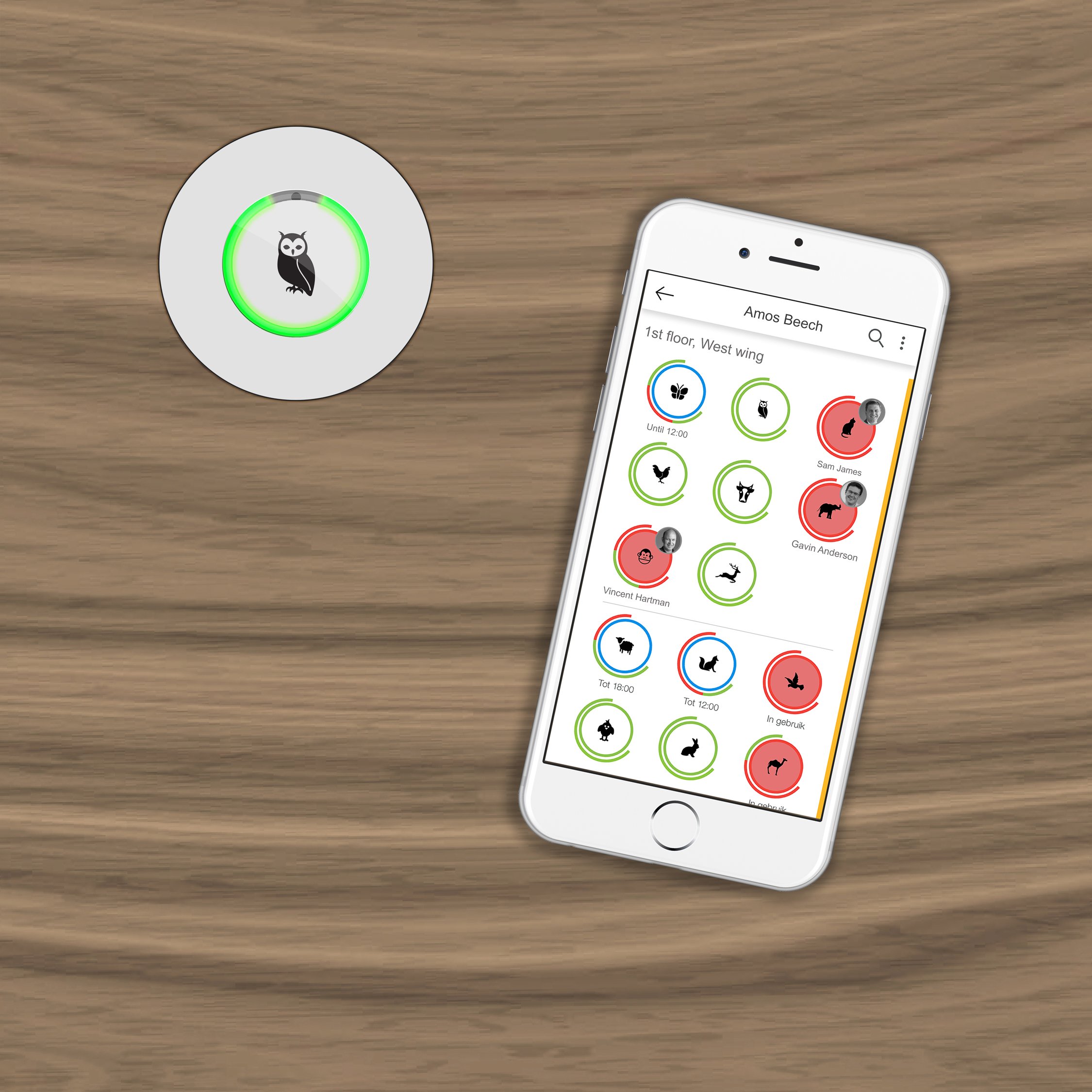
In today's smart offices, hot desking applications such as the app marketed by iOt Space now enables employees to choose and book their desks in advance. This app helps avoid the confusion that could arise in case two people want to sit at the same desk. The apps help one find an available desk and they also navigate you to the desk with no delay, especially if you are visiting the office from out of town.

Office layout showing workspace occupancy
This way, some of the challenges that the studies above found are simply non-existent.
Positive research, however, has shown that employees who have self-contained work processes and who view themselves as independent and mobile thrive in activity-based work environments. They can therefore easily choose a workstation based on their preferences or needs. Another positive is that they can avoid social interaction when they need a quiet space to work from.
Its supporters say that the main reason companies implement activity-based working environments is to attract and retain talent. They also wish to take care of their employees’ sustainability and wellbeing while increasing innovation and collaboration.
Based on the various research findings discussed above, we can conclude that there is no one size fits all solution. ABW and hot desking will increase collaboration, efficiency, and communication but it will come with its own challenges.
Of course, any challenge can be surmounted. Since every company is unique and has unique needs, you shouldn’t necessarily base your decision on research done on other companies.
You can use such reports as a way to get started. Afterwards, you should consider your own circumstances.
Factors You Should Consider Before Implement Activity Based Working
Think about it this way: the way people work changes throughout their life. It’s only natural that they can accommodate (and even expect) an evolution of their working environment.
During the school years, everyone knew a certain space was dedicated for a certain activity. There was no in-between. For example, the music room for music, the gym for sports and the laboratory for science.
When they got into a university, they had the choice to either get the group work done under a tree, at the café, or in the library. A traditional workspace may therefore not work for them. Organisations have no choice but to embrace these new ways of working if they want to retain and attract new talent.
Before making the change, however, employers have to consider some important factors including:
What Are the Reasons for the Change?
Why do you want to implement activity-based working? Are you doing it because everyone else is? Do you feel like your peeps could benefit from more interaction?
Activity-based working encourages collaboration and therefore your business can easily pull a team from different departments in your organization to work on a project if everyone is mobile. Employees are different, and this difference is what makes activity-based working a good model.
Those who require isolation can work at their own stations while those who thrive in a noisy work environment can also do their thing. It encourages responsibility. More importantly, employees are treated as adults who can choose an environment that makes them productive.
Before making the decision, consider your employees. Ask them how they feel about it.
Make Sure Your C-Suite Supports the Move
If they do, then they will offer you support and advocate for the chance by leading by example. Otherwise, everything may be doomed from the start.
If your employees see that C-level execs never step foot in the common workspace, they will feel discriminated and treated as less important.
Of course, we all know that C-level execs need privacy. But they also need to be among their team every once in a while, don’t they?
Choose the Best Model for Your Team
As previously mentioned, there is no one size fits all when it comes to designing your office. Do a thorough research on the different models available and then choose one that suits your organisation’s needs. Obiously you can ask the workplace consultants here at Amos Beech for help.
Take Change Management Seriously
As you invest in this move, make sure your employees are educated on why the move is necessary, the benefits of the move, what will be changing, and why this particular model has been chosen. Use an effective communication plan that will involve different mediums and engage employees at all the levels of the organisation.
Test Drive before Purchasing
Test whether the change will be effective using a pilot workspace. This is an effective change tool because, from it, you can tell whether the move will benefit the company or not.
The pilot will also be a learning phase that will help you tailor a suitable working model as per your needs. Plus, it will help the employees warm up to the new way of doing things and how it will eventually affect them.
Don’t Be Discouraged by Negativity
Change is hard and some of your employees will not be thrilled by it. Learn from them but do not let them bring you down.
Recruit the Right People and Rid the Company of Paper
Activity-based working can enable you to manage all your records electronically. This will reduce your carbon footprint and turn you into a more desirable employer and business partner for your clients.
Also, make sure you recruit leaders with skills and expertise in activity-based working so they can help other employees easily adapt to the new move. Safeguard your investment by choosing the right people to handle it.

Final Thoughts
According to a case study by UK’s HR Magazine on Atlas Copco’s introduction of activity-based working at their UK office, the exercise proved to be successful.
The company implemented a cockpit for individuals needing privacy, a larger cabin that allowed for small groups to work together, and an open space furnished with multiple desks. This gave them a digital workspace that can be reconfigured whenever the needs of an employee change. The employees are now more connected and engaged since their working conditions have changed for the better.
Activity-based working benefits may not be felt immediately, but they are broader and long-term. And if they are properly executed, they can foster the wellness of the employees by improving their mental, physical, and social wellbeing.
Got 4 minutes?
Go and watch a really great video! Veldhoen + Company have created a great animation about what Activity Based Working is and what it isn't:
Most important takeaway:
"Whats really needed is a workplace tailored to the actual needs of people.”
A great working from home solution!
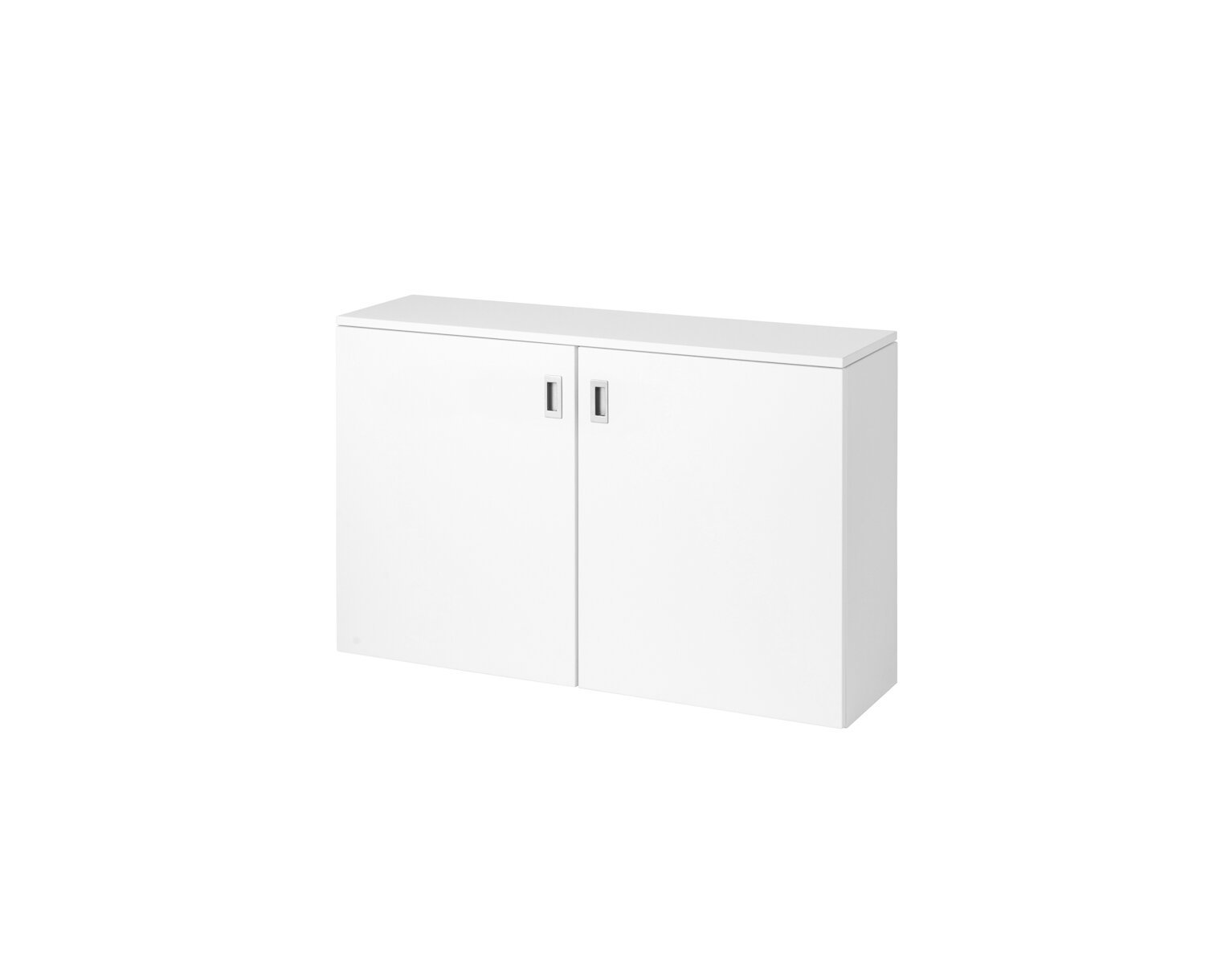
An ergonomic sit-stand desk hidden in a small cupboard in the colour of your interior! That’s HomeFit©.
Working from home is probably here to stay. When the vaccine is fully rolled out and things can return to normal, many businesses and organisations will have come to the conclusion that working from home has it’s advantages. Just think about the saving on expensive office space, commuting time, environmental impact, etc.
Working from home and ergonomics
However, it is possible that the home office environment may have a negative impact on the home office worker from an ergonomic point of view.
“Working at a desk is the new smoking” we wrote earlier and that was about professionally furnished offices!
At home as well as in the office, it is important to work in alternating sitting and standing postures. Most kitchen tables don’t allow this to happen.
If you have the luxury of a separate study or spacious home office, you would probably choose an adjustable desk and a decent office chair. However, not everyone has the space for such a home office.
That is why Amos Beech in Scotland, introduces the HomeFit© working from home solution!
With a width of only 105 cm and a depth of 30 cm, HomeFit© is no bigger than a shoe cupboard or a large suitcase. The unique design and many colour options will guarantee that HomeFit© blends seamlessly into any living room.
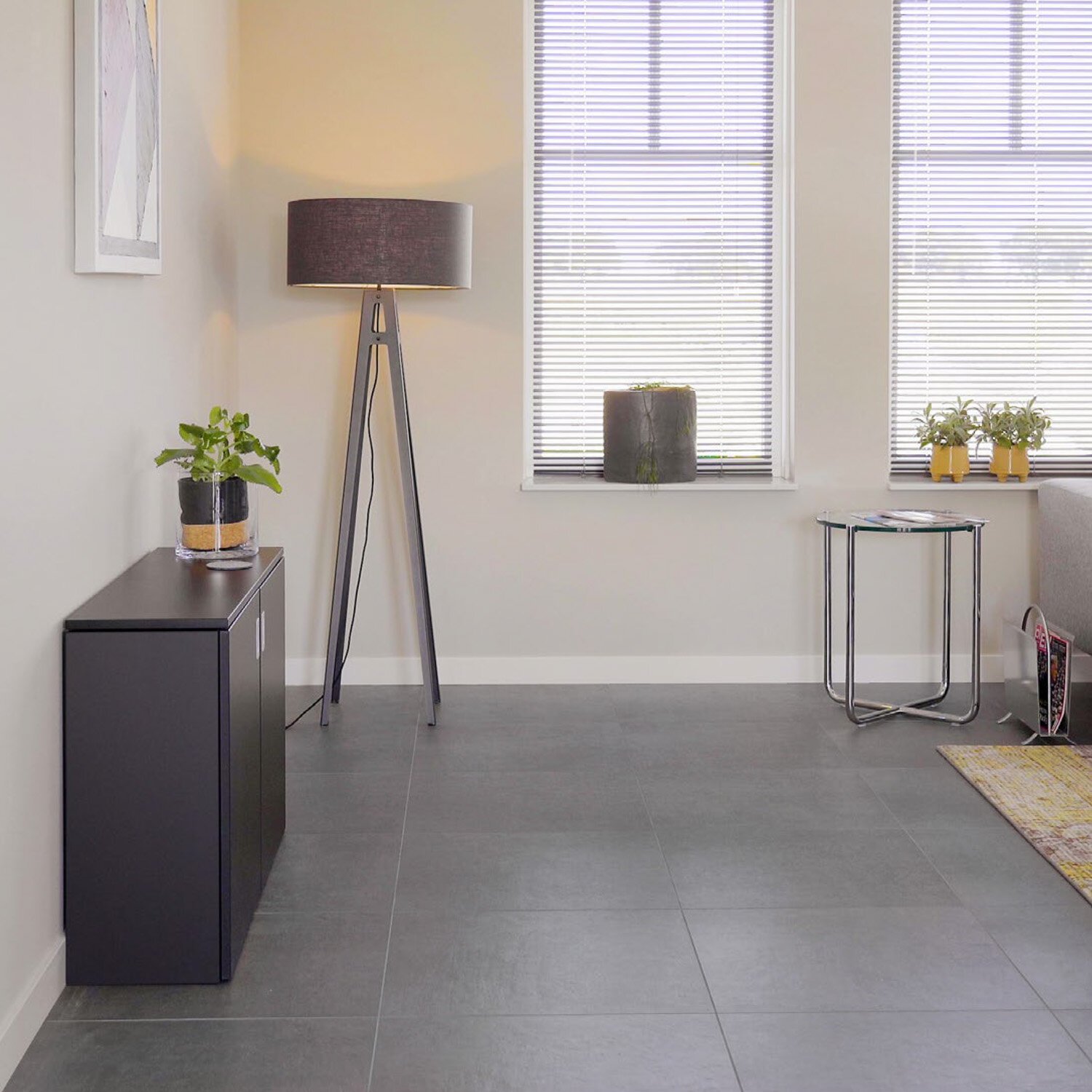
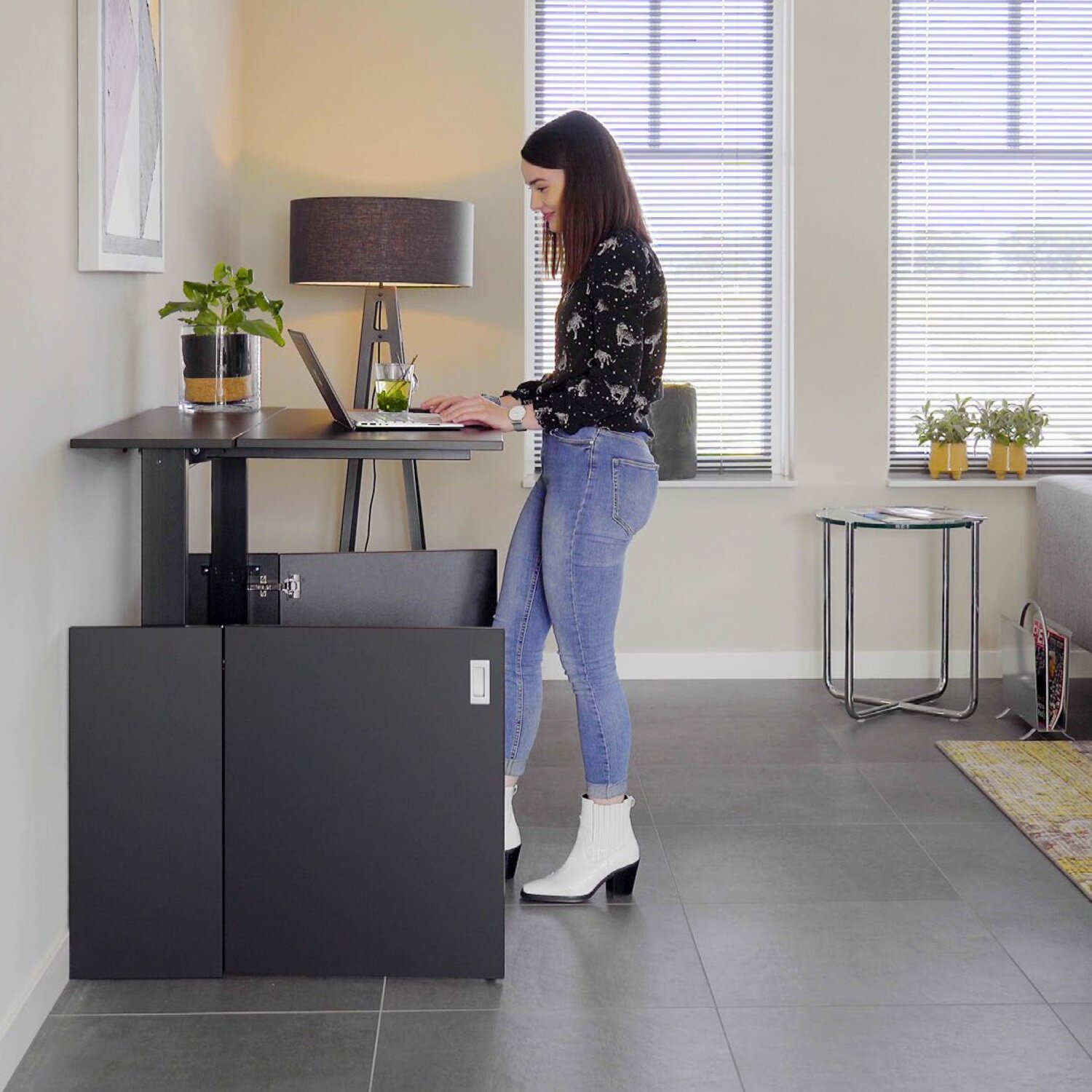
HomeFit© is the professional workstation for the home; fully electrically adjustable in height from 68-118 cm, so that you can work at the correct height both sitting down and standing up. Thanks to its compact size, there is always a place in the living room where HomeFit© is at its best.
“Scroll down for price and order form button”
Click on the image above to play the video
The transformation from an easily overlooked piece of home furniture, into a fully functional office workstation, can be done quickly and easily by opening the doors and raising the worktop. The worktop also contains the controls for height the adjustment. The handy storage tray in the cupboard provides space for work related items such as laptop, mouse or work folder.
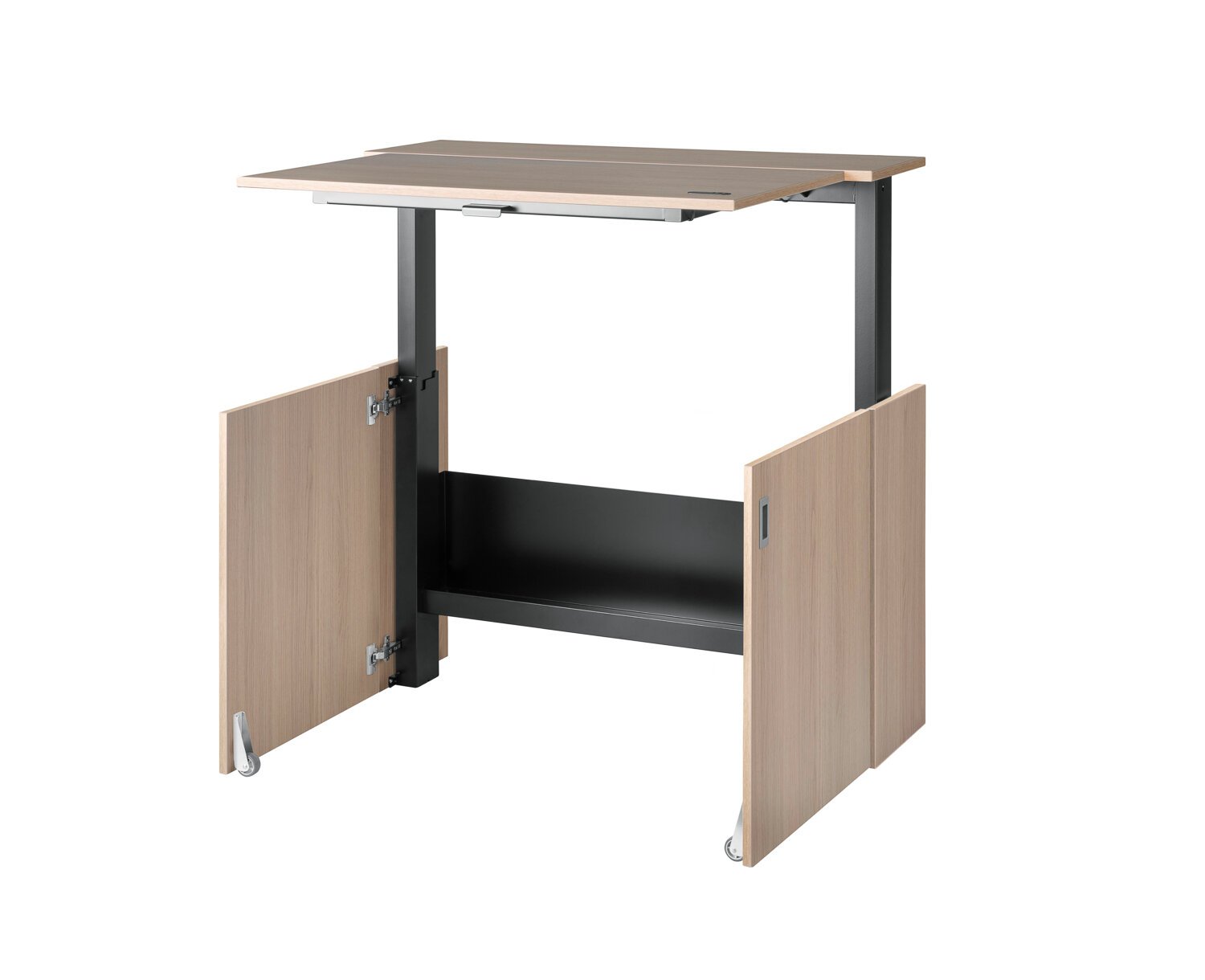
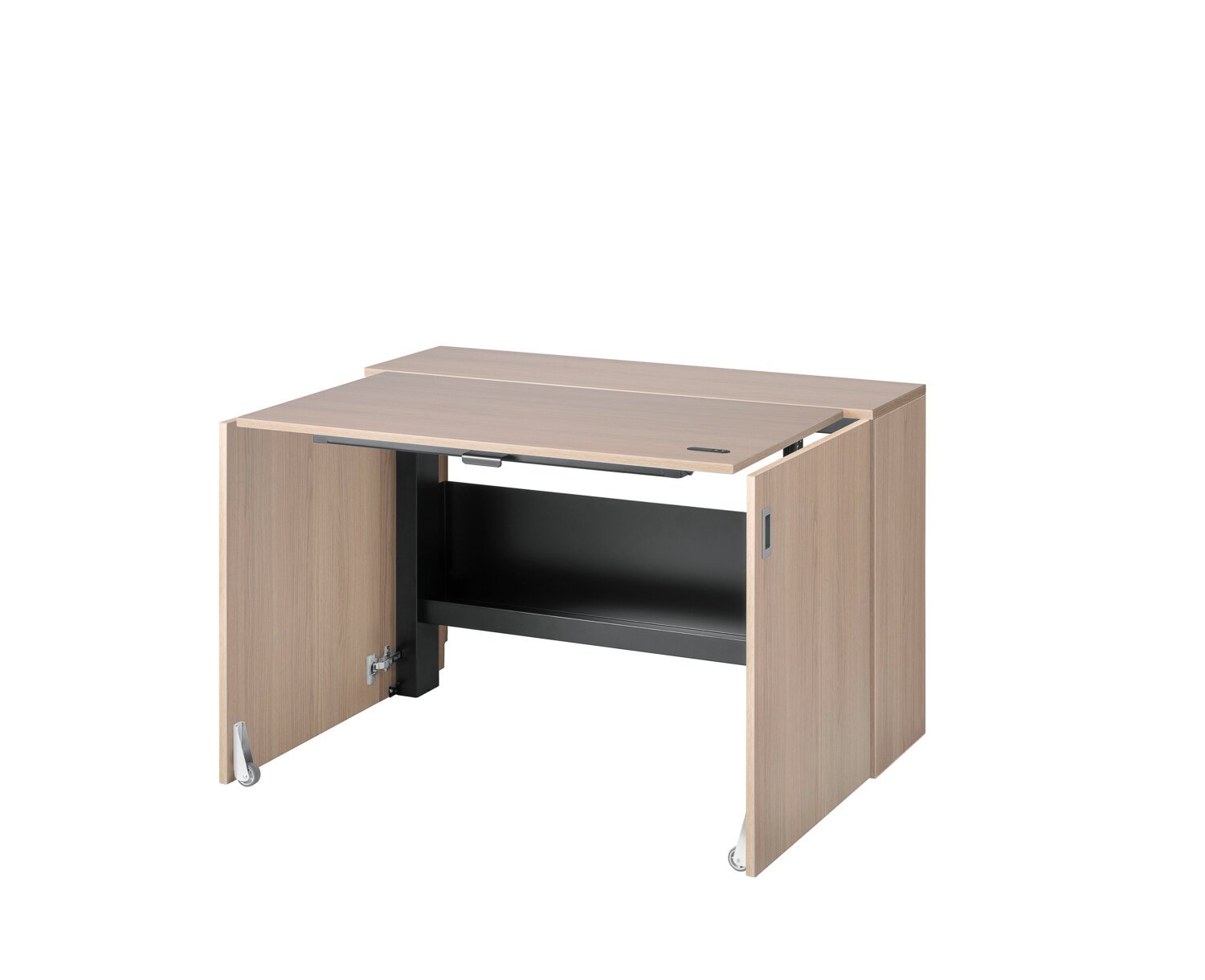
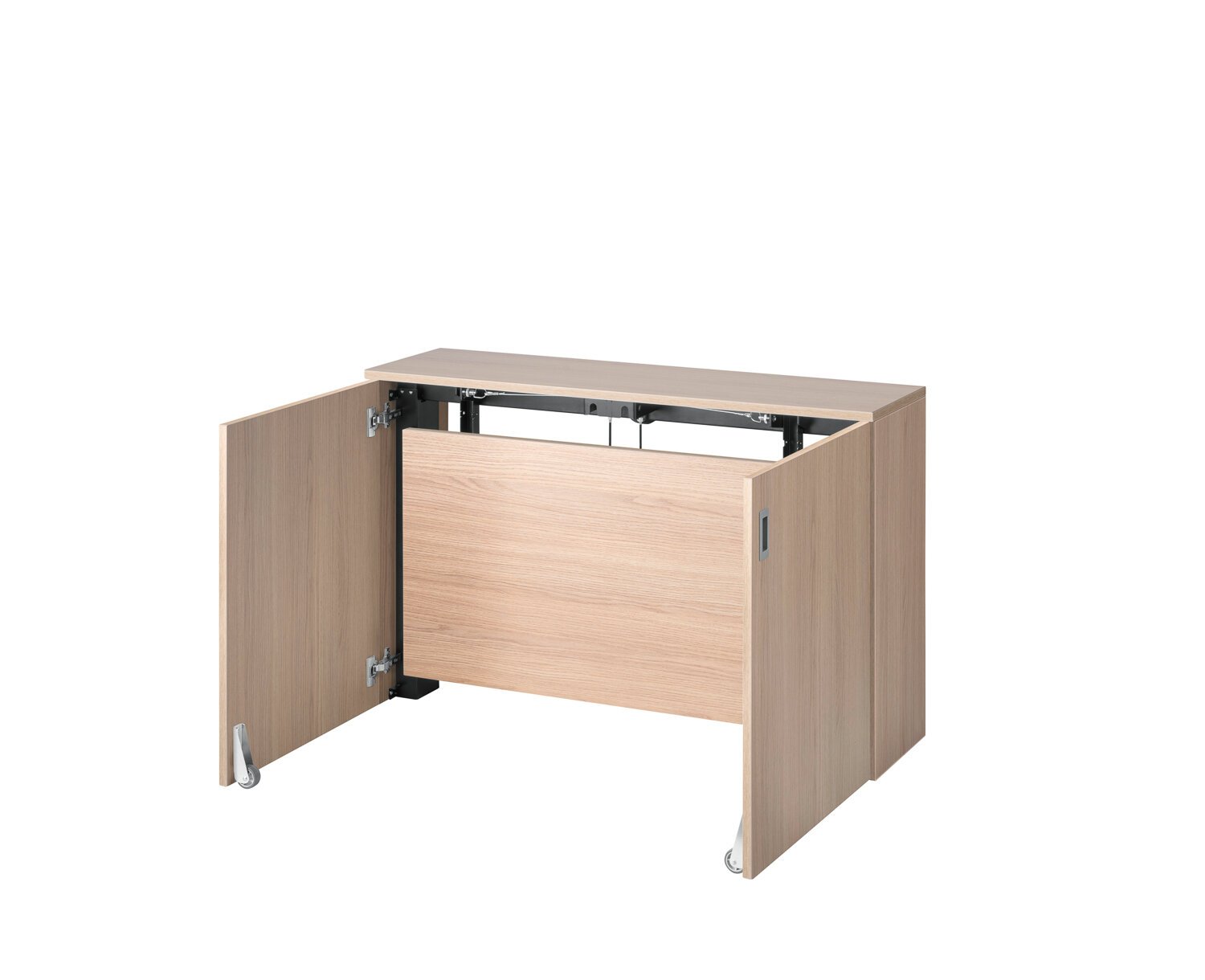
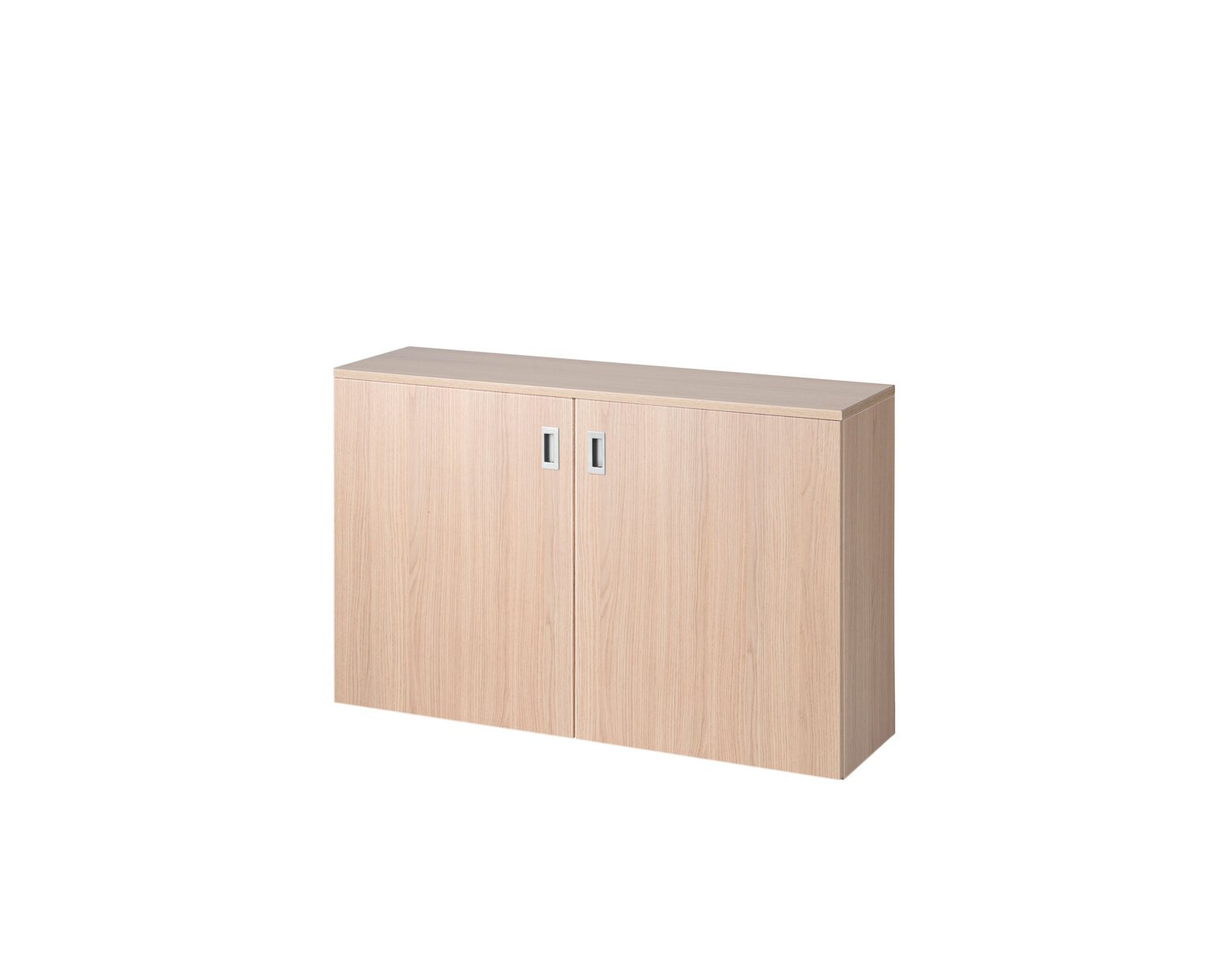
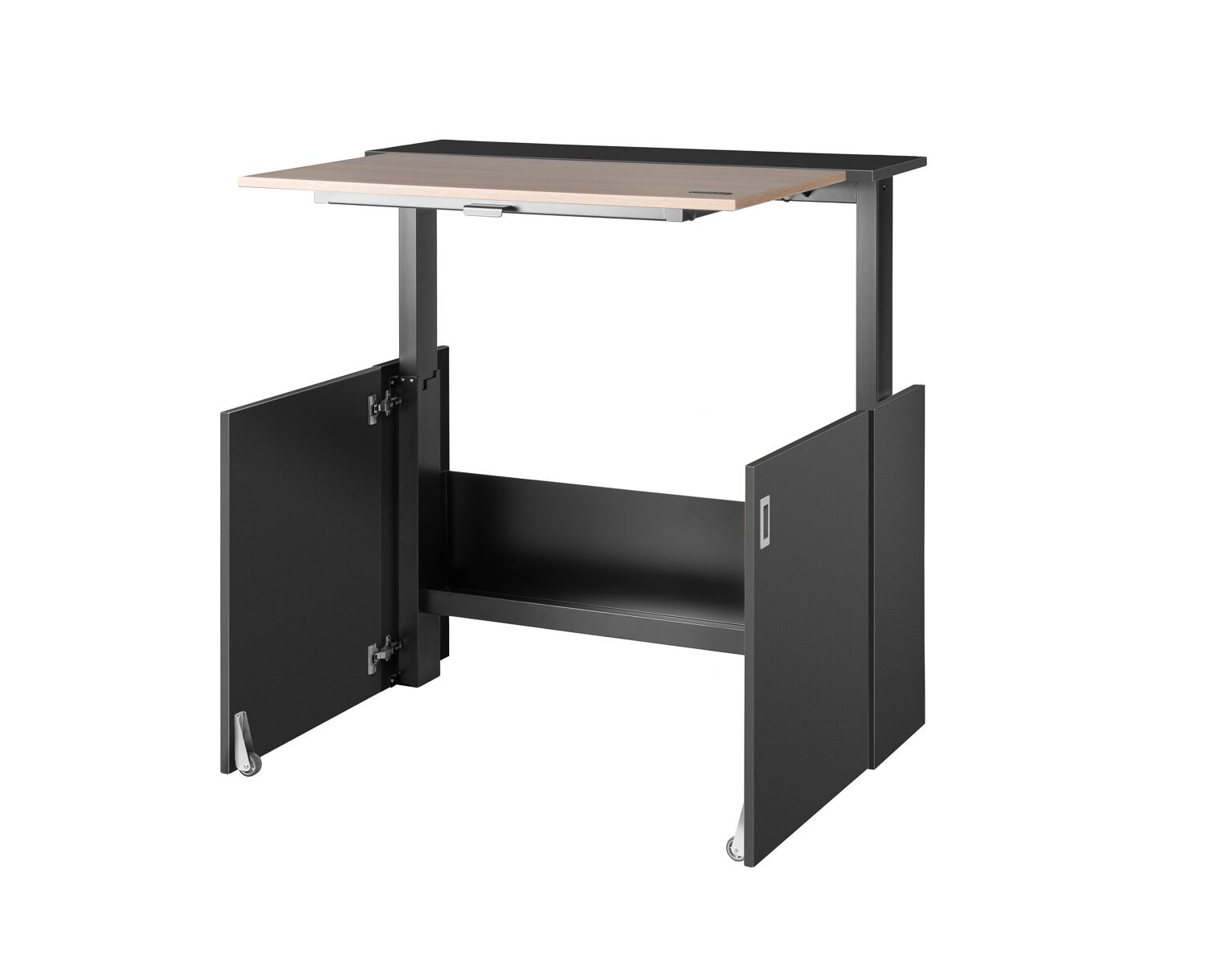
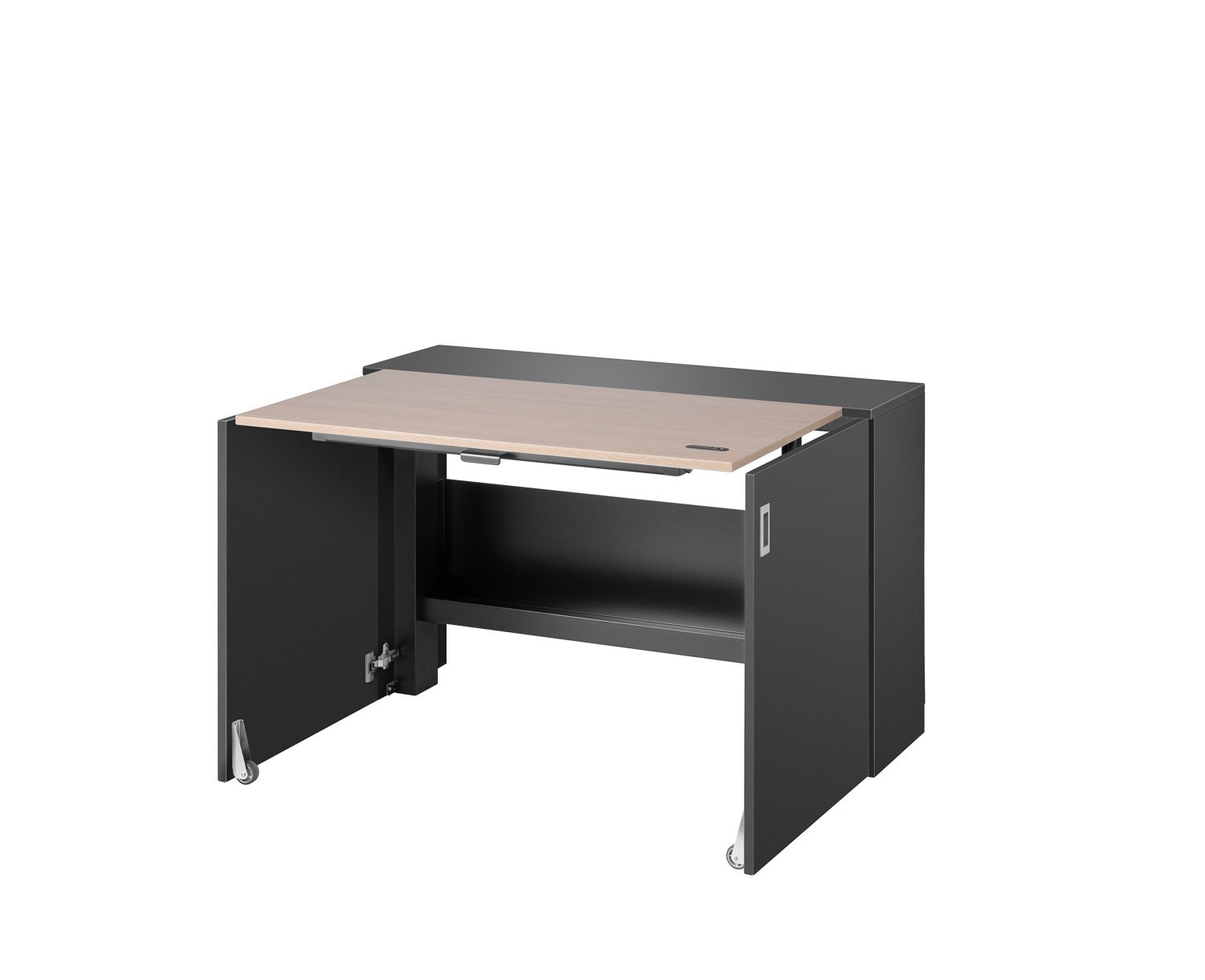
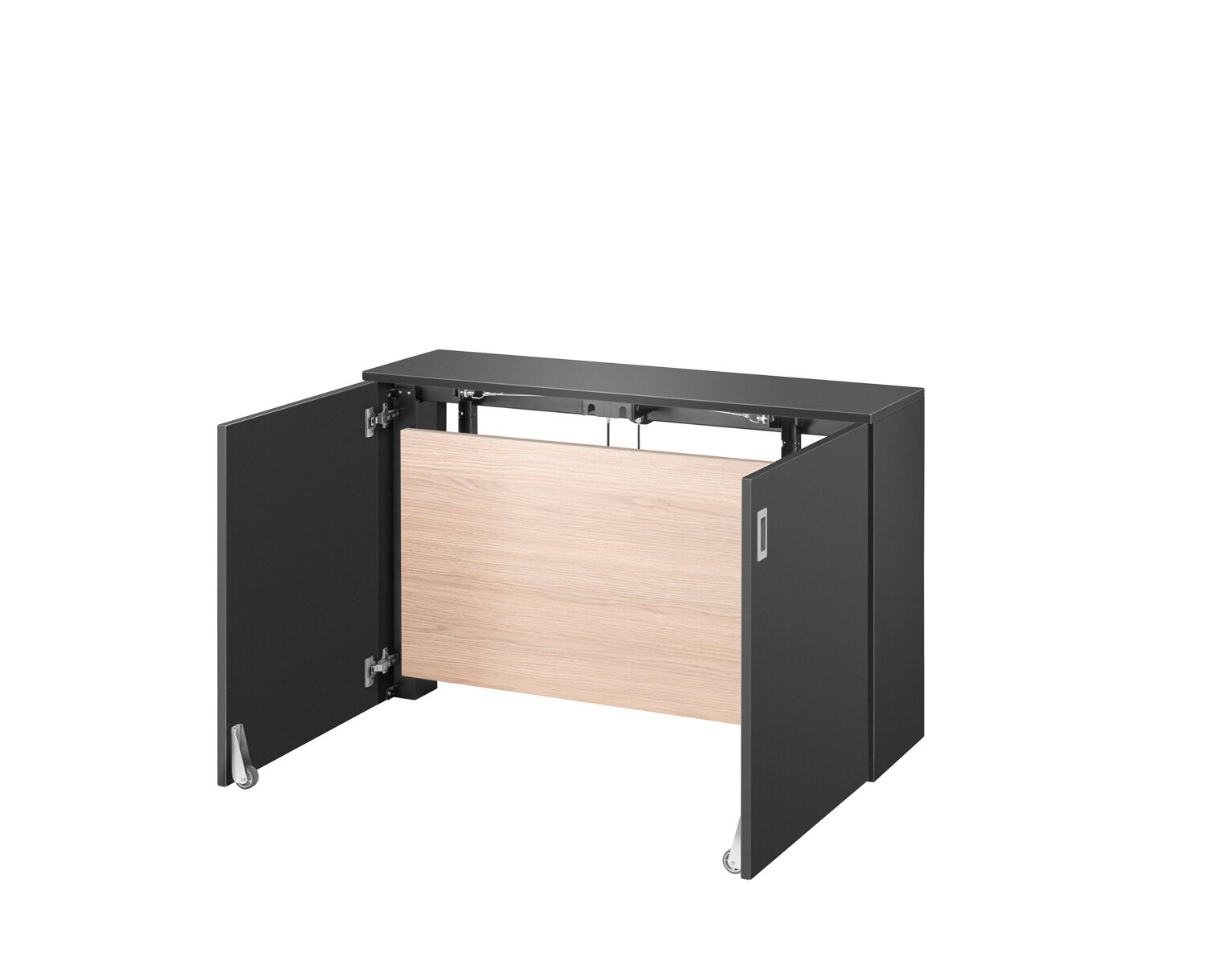
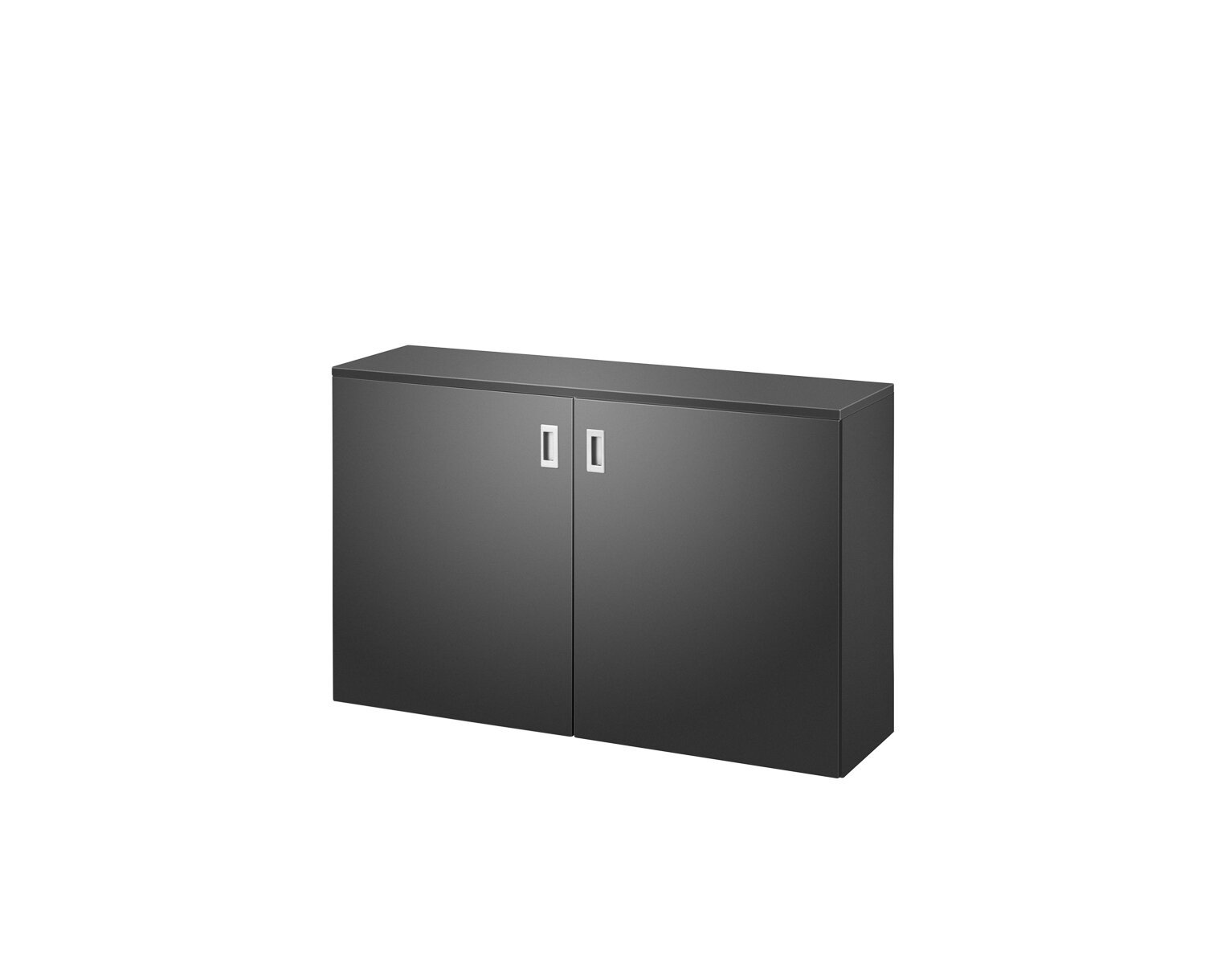
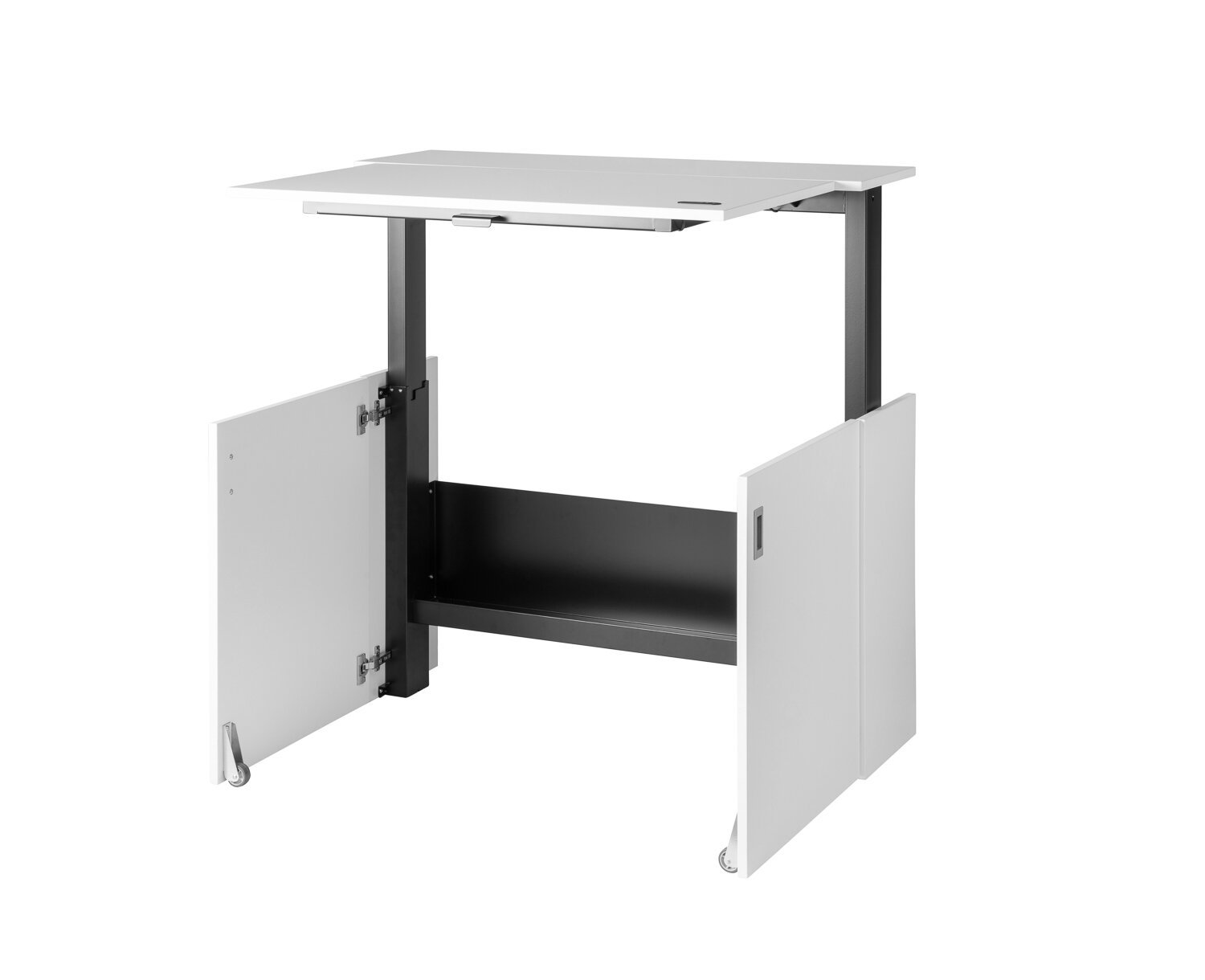
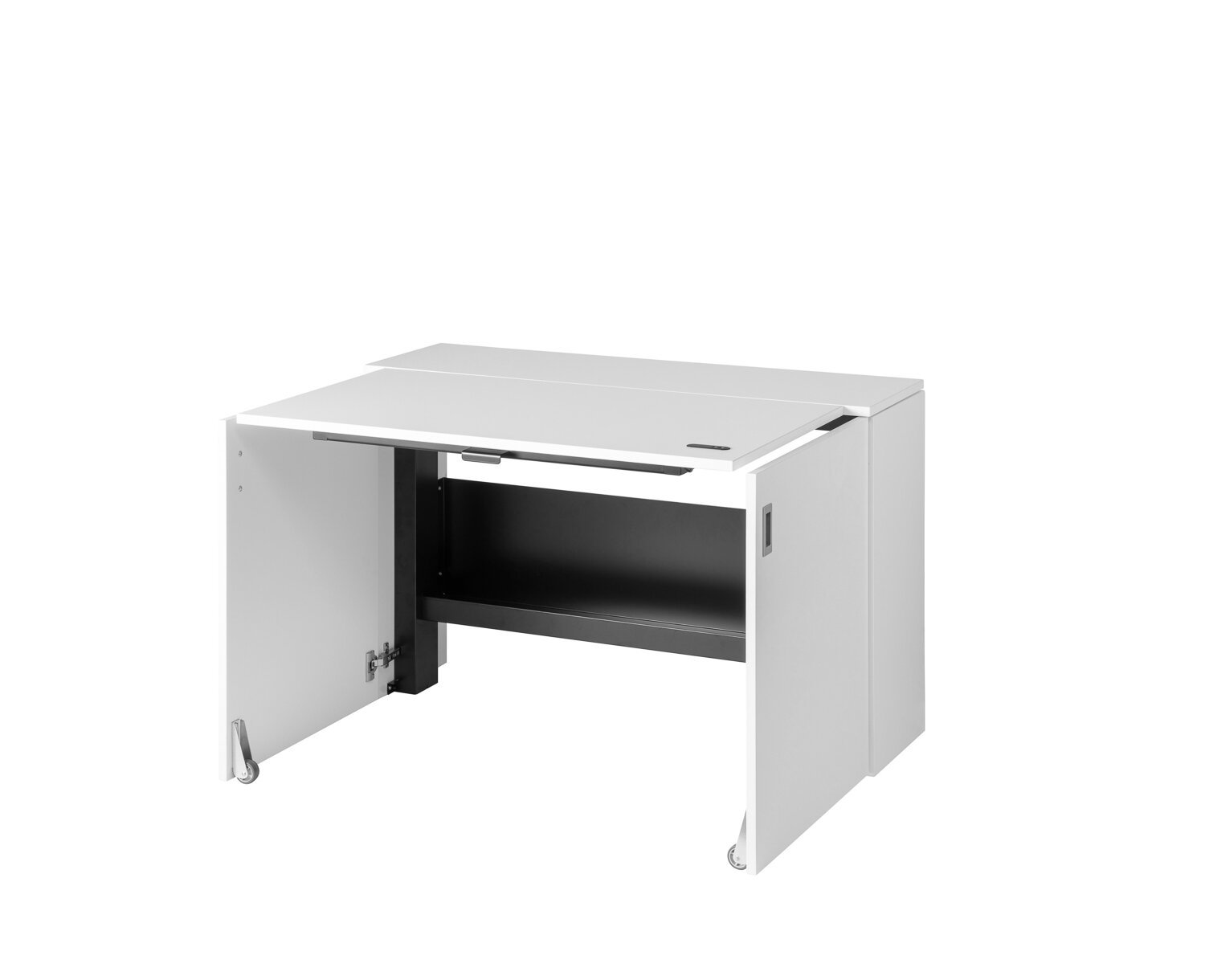
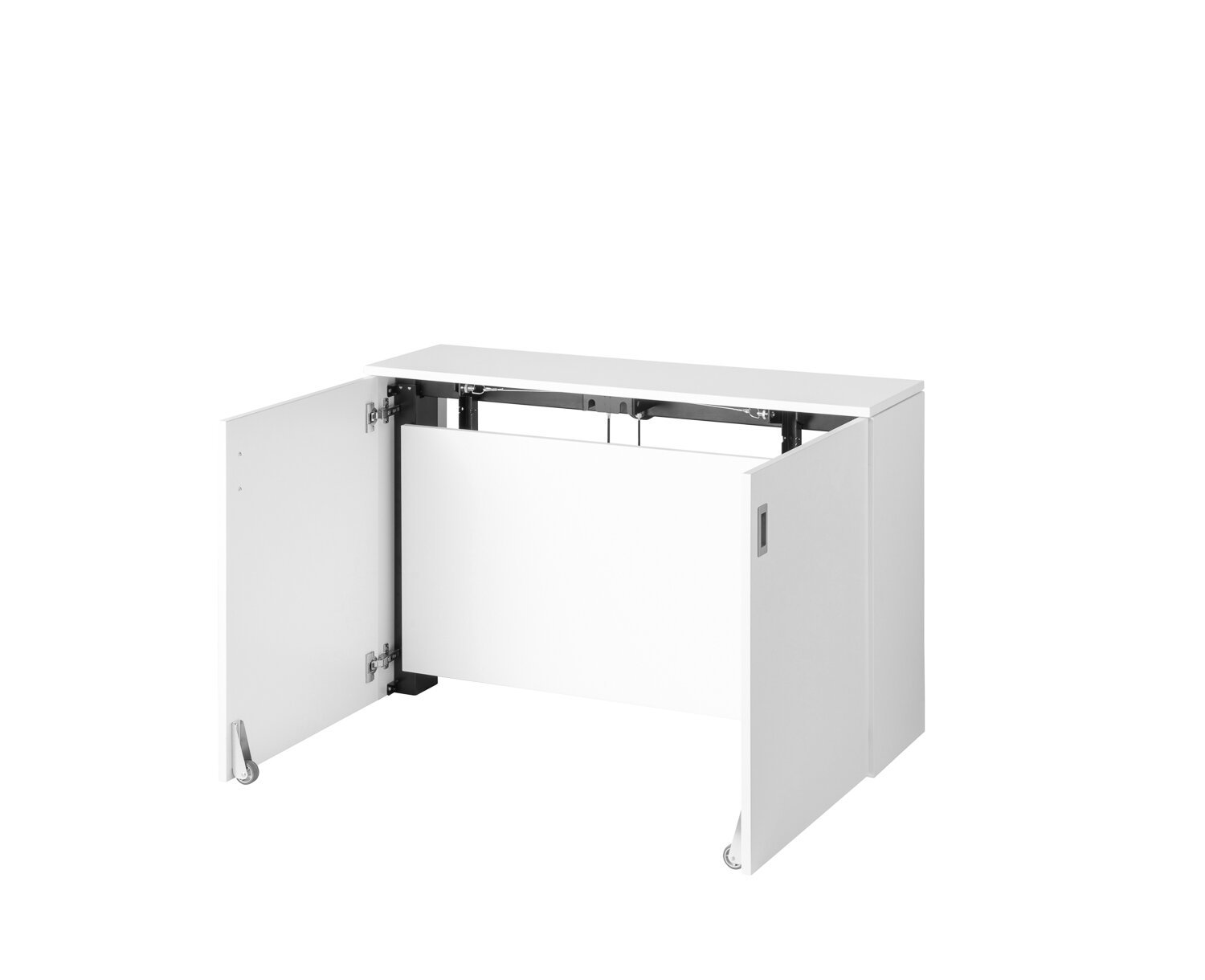
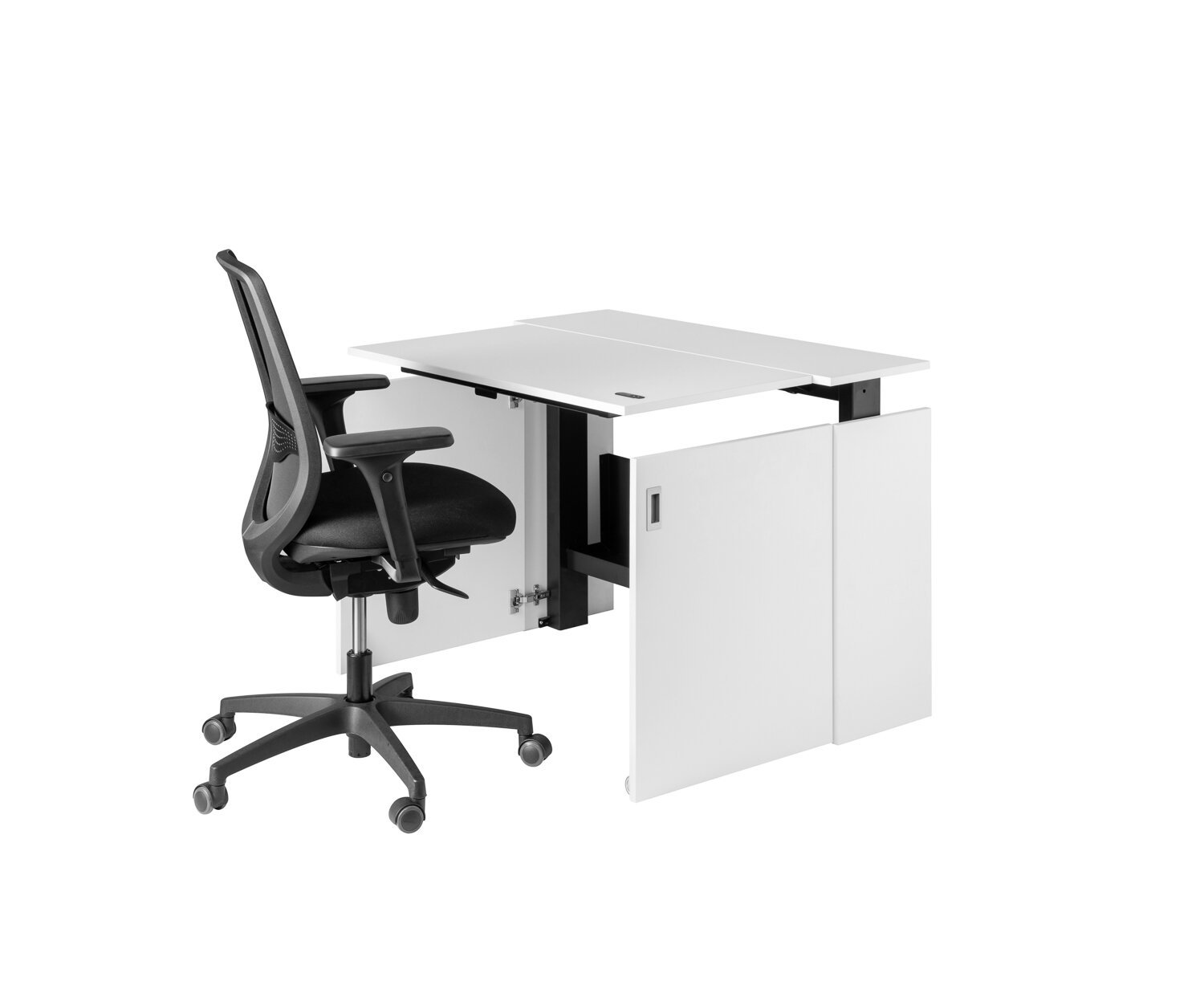
Specifications
electric sit-stand desk, adjustable in height between 68 and 118 cm
black powder coated metal frame with aluminium door handles
safe-stop height adjustment; height adjustment stops automatically if counter pressure is detected
door lock in open position; the right door locks automatically when opened up to prevent the desk from tipping over. The lock can be released with a simple foot control.)
doors fitted with castors for easy opening and stability when opened
convenient metal storage tray for laptop and other office accessories
HomeFit® is delivered fully assembled in a cardboard box
W x D x H: 1050 x 298 x 680
sit-stand heigth: 680 - 1180
Complies to:
NEN-NPR 1813: guideline for office furniture and their application
NEN-EN 527-1: European standard for work tables and desks
ISO standards: 9001 quality, ISO 14001 environment and ISO 26000
CSR guidelines
ILO - labour and social standards
Colours and lead-times
Approx 15 working days for the following standard colours:

Natural Oak 57
white E0-00

Black 720
4-6 weeks for other colours
available from November 2020
for other finishes, click here (pdf file).
For more information contact the office: