


Lease or Finance Options for your Office Fit Out or Refurbishment project
Is the Cost of Office Fit Out or Refurbishment too High to Pay Upfront in Full?
Undertaking a complete refurbishment or fit out of your office can be quite costly. However, it is also necessary. The right office furniture, style, design and “feel” of the office space altogether can transform your business for the better.
In other words, postponing or cancelling the refurbishment completely is not the best option for your business.
But what are you to do when budgets are tight and your company has cash flow issues?
At Amos Beech we love offering complete solutions to our clients. This is why we we work with registered lease providers who will be able to offer advice and flexible financing solutions. For an entire office fit-out, the cost can be spread over a 2 - 6 years term:
If you want an estimated guess on your project value, check our cost calculator.
Meet the Perfect Financial Solution for Your Office Fit Out or Refurbishment
When budgets are tight, but the project has to be completed, you typically have three options:
Bootstrap and pay everything upfront
Get a loan from a bank
Lease the project
Paying cash upfront is ideal if the payment won’t leave your company vulnerable. Plus, keep in mind that the total cost of the refurbishment or office fit out might exceed, the annual investment allowance (AIA) that went up from £200,000 to £1,000.000 in January 2019 and extended on April 1st 2023. Thus, you may not be able to offset the entire expense.

A bank loan can typically be paid between one and 10 years. You can deduct each payment against AIA, but the interest rates (that are subject to fluctuations) can make it hard for you to plan your finances for the long term. Plus, you run several other risks if the loan is tied to some of your crucial assets. Furthermore, a bank loan may not cover all the expenses related to your project.
A lease, on the other hand, can cover everything, from design and build to office furniture. You can also write the payments off as expenditure. And, since the payments are fixed, they are also easy to budget for. Your cash flow is protected since you don’t need a large deposit. You would lease purchase and only pay a token to transfer ownership at end of the payment plan.
The current lease conditions are quite flexible and friendly for Scottish businesses.
Why?
Because leasing is not yet as popular here as it is in the USA or other European states. However, as its popularity begins to grow, the advantages are likely to diminish.
How Leasing Unties Your Capital
Your capital is the backbone of your company. When you can’t make the investments you need, your growth is stalled. This is why it’s always a good idea to have a healthy cash flow and a healthy investment capital instead of tying it up in various assets and/or overdrafts.
Leasing your office fit out or refurbishment project can help you:
Stay liquid: no large initial payment means that your cash flow is not significantly affected and remains free to be invested in the next great opportunity that knocks at your door.
Budget accurately: unlike in bank loans, in lease financing your payments are fixed because they are not subject to interest rates. So you know exactly what you will be paying today and two years from now.
Keep your bank credit lines free: your bank overdrafts are unaffected, so you can always use them for investment opportunities.
Buy cheaper: leasing can actually be cheaper than paying for the refurbishment of your office upfront. Even if the project exceeds the annual investment allowance of £1,000,000, you can still deduct all your leasing payments.
Tax efficient: for private sector organisations leasing provides a highly attractive fully tax deductable solution. In addition to that the VAT is spread as it is paid on each repayment.
Stay flexible: the typical lease is between three and five years, but you can always opt for a personalised length of contract that fits your monthly budget and your needs.
Start your project quickly: bank loans and credit lines can take months to be approved. A lease financing can take as little as a few hours.

Who is it for?
Public sector: by spreading the costs, the projects can be delivered as and when they are needed most.
Charities: have a duty to trustees to make budgets work as hard as possible and get the VAT to spread, as most charities can’t claim the VAT back.
Professions: like doctors, lawyers, accountants, dentists and vets, but also partnerships are all subject to higher rates of tax and the tax benefits need to be explored.
Large Corporates: having lots of available capital doesn’t mean that you shouldn’t explore tax benefits. The available cash can then be used where it most benefits the business.
SMEs: with the saved capital, new people can be recruited to grow the business.
Don’t Postpone Your Office Fit Out and Furniture. Be Smart about it Instead!
At Amos Beech, we know a lot about how office interiors can shape and transform your corporate culture. From better acoustics to switching to activity-based working, we’ve seen seemingly minor improvements bring great results.
This is why we have partnered with the top lease financing company in the country to offer you the flexibility you need to reap the benefits of office refurbishment and fit out NOW, not in a couple of months or years.
















Wellbeing, Wellness & Workplace
Wellness is now BIG business! It moves you one step closer to a new, and better you - a you that drinks green juices and rids your body of all lingering toxins, a you that enrolls into spin classes before 6 am and has more energy as a result, a you that plugs into head space every evening to calm the mind before your 8 hours of sleep.
For the past month at Amos Beech, wellness has been at the forefront within the office. By being provided with a conscious checklist, we've become more self-aware of our actions and routines within our lifestyle and how it affects us in the workplace.
Wellbeing & Wellness in the Workplace
Here are a few insights and examples that you can try to integrate into your workplace to get the Work/Life balance back on track:


Outside, Inside
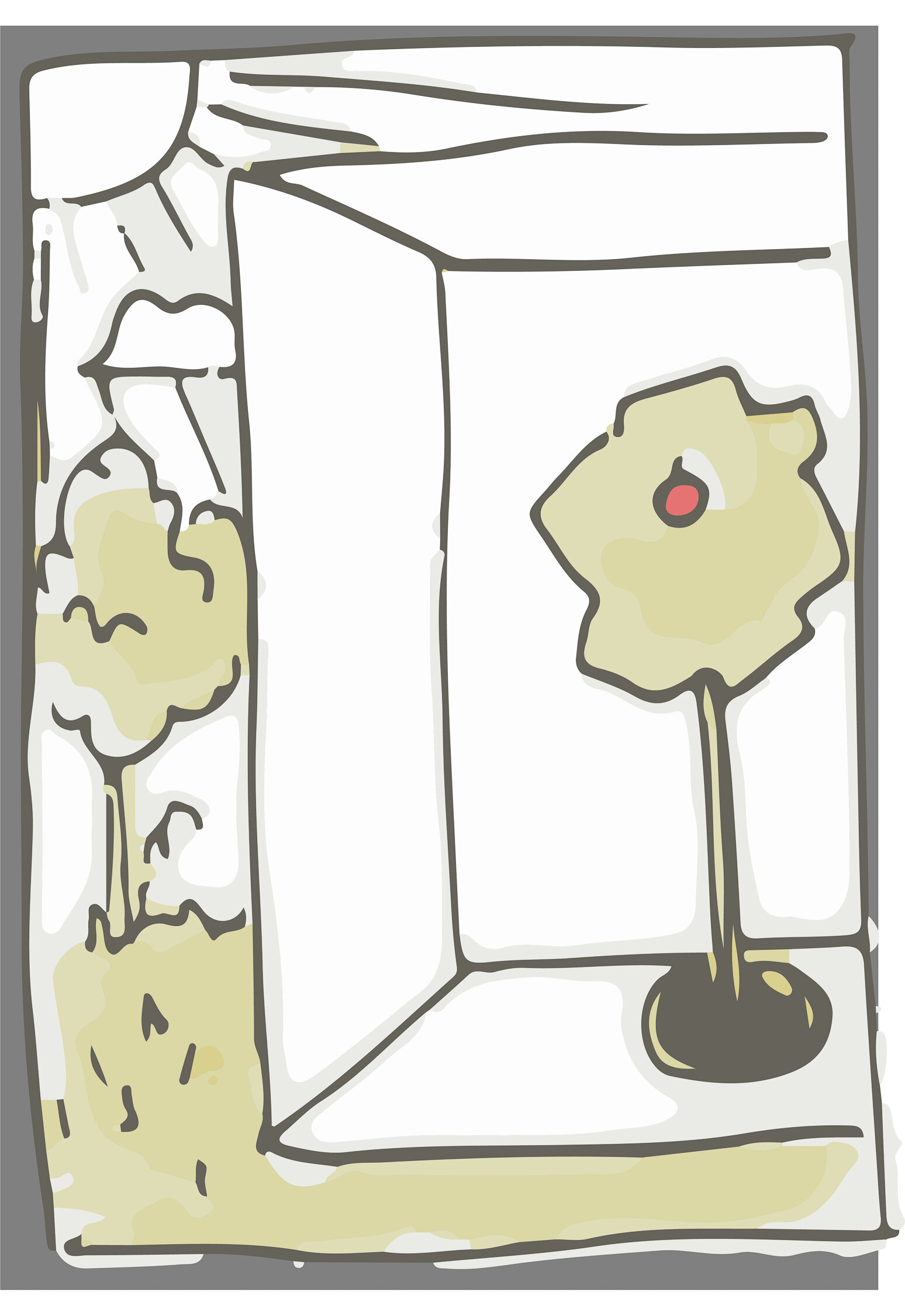
Since our blog about Biophilia within the workplace, we've all seen workplaces flourishing everywhere. But how about having greenery with a purpose? At Takahashi Hiroko, based in a former factory in Tokyo, redesigned by schemata includes an indoor garden with edible plants.
Fresh Foods
With your office-grown ingredients to hand, having healthy food options will fuel your employees and keep their cravings for sweet and fatty foods away. Even as simple as sharing good food at a decent table will work wonders for your firms' staff morale and community feel.
Workout While Working
Many Japanese corporations understood early on the importance of exercise for their employees. It grew out of their philosophy of kaizen, or “continual improvement.” They appreciated that a workout could make their employees healthier and more productive, therefore began to schedule exercise programs during work hours.
We suggest dedicating a bit of space to being 'multi-use' area, where a variety of exercise classes and wellness workshops could take place. Consider offering something different from the standard yoga, perhaps something that also encourages teamwork. But if space is limited, try getting your employer to take a step in the right direction by contributing towards a gym membership or cycle to work scheme.

Personalised Technology
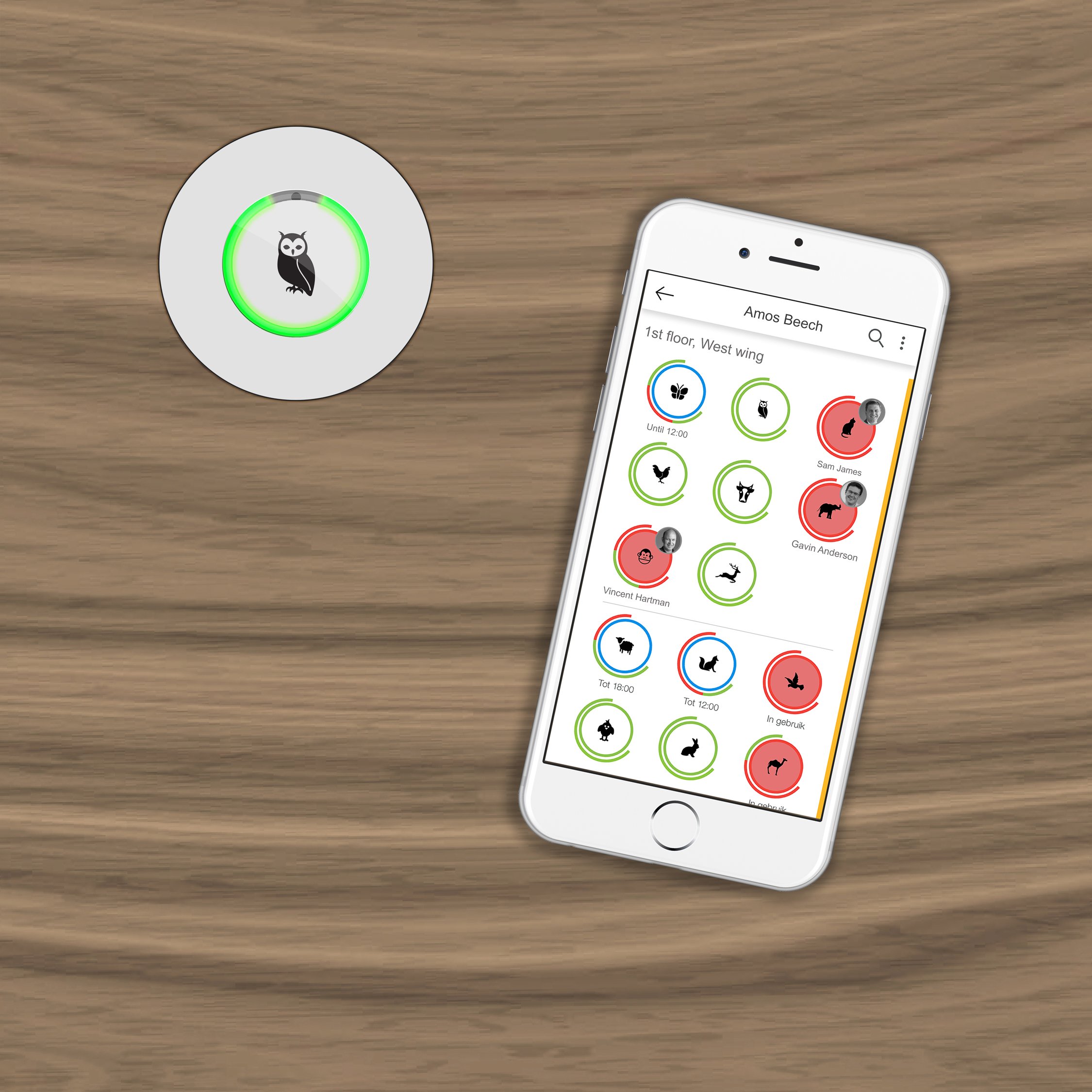
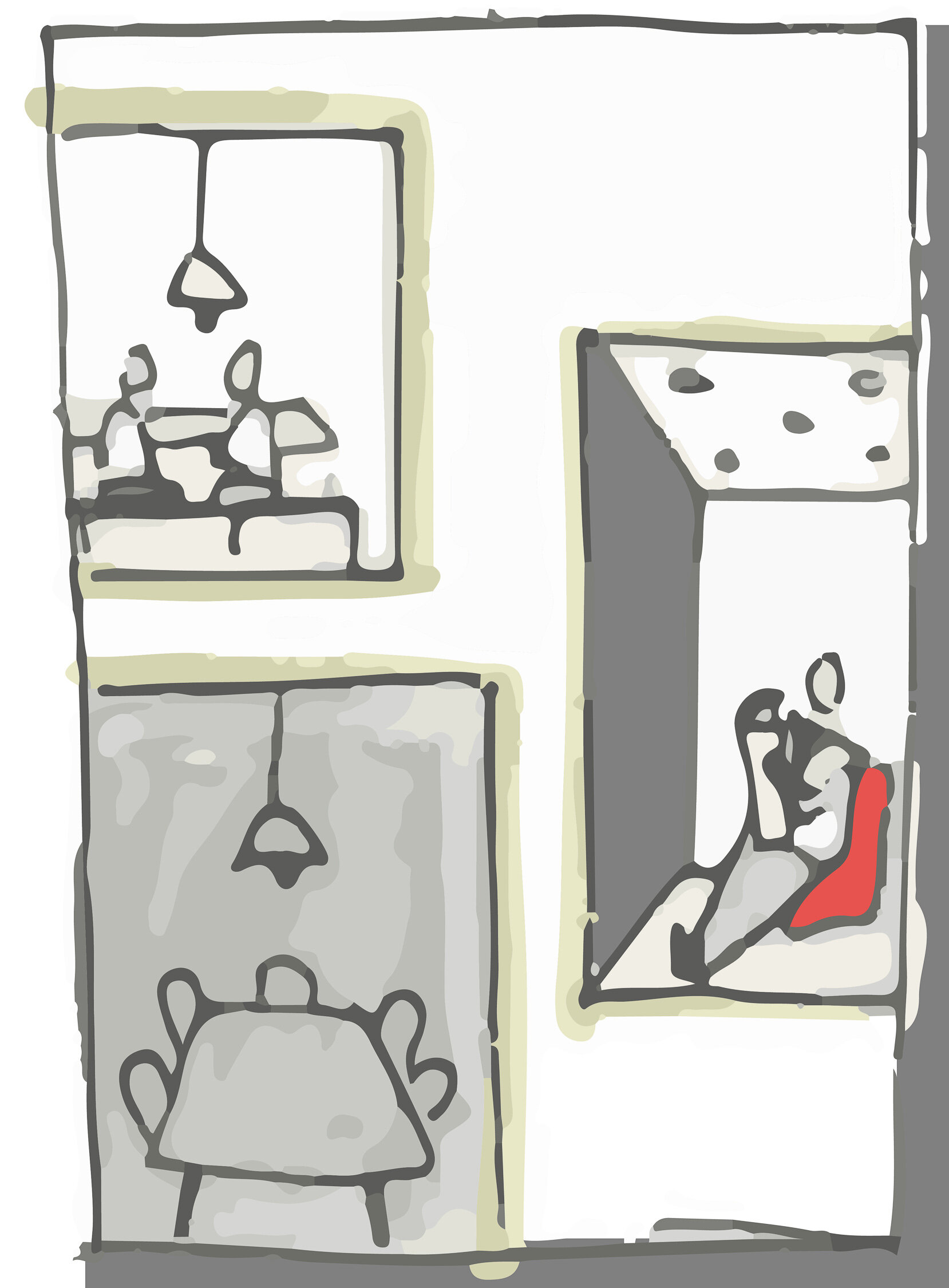
In other news, Scotland's first development has been accredited with a Platinum WiredScore Certification at 177 Bothwell Street, Glasgow, to assure future occupiers with the best connectivity. We've seen more products beginning to appear that allow employees control over their surroundings, but also products that understand and adapt to the needs of the employees throughout the day.
Philips has installed a system of LED lights in an office in Prague that fluctuate to the circadian rhythms of employees from morning through to night. This ideal is reminiscent of the Endless House, a conceptual work of architecture by Frederick Kiesler in 1924; “endless like the human body—there is no beginning and no end to it.” In the future, we will see smart buildings understanding the needs and wants of the inhabitants and adapting seamlessly.
Healthy Workstations
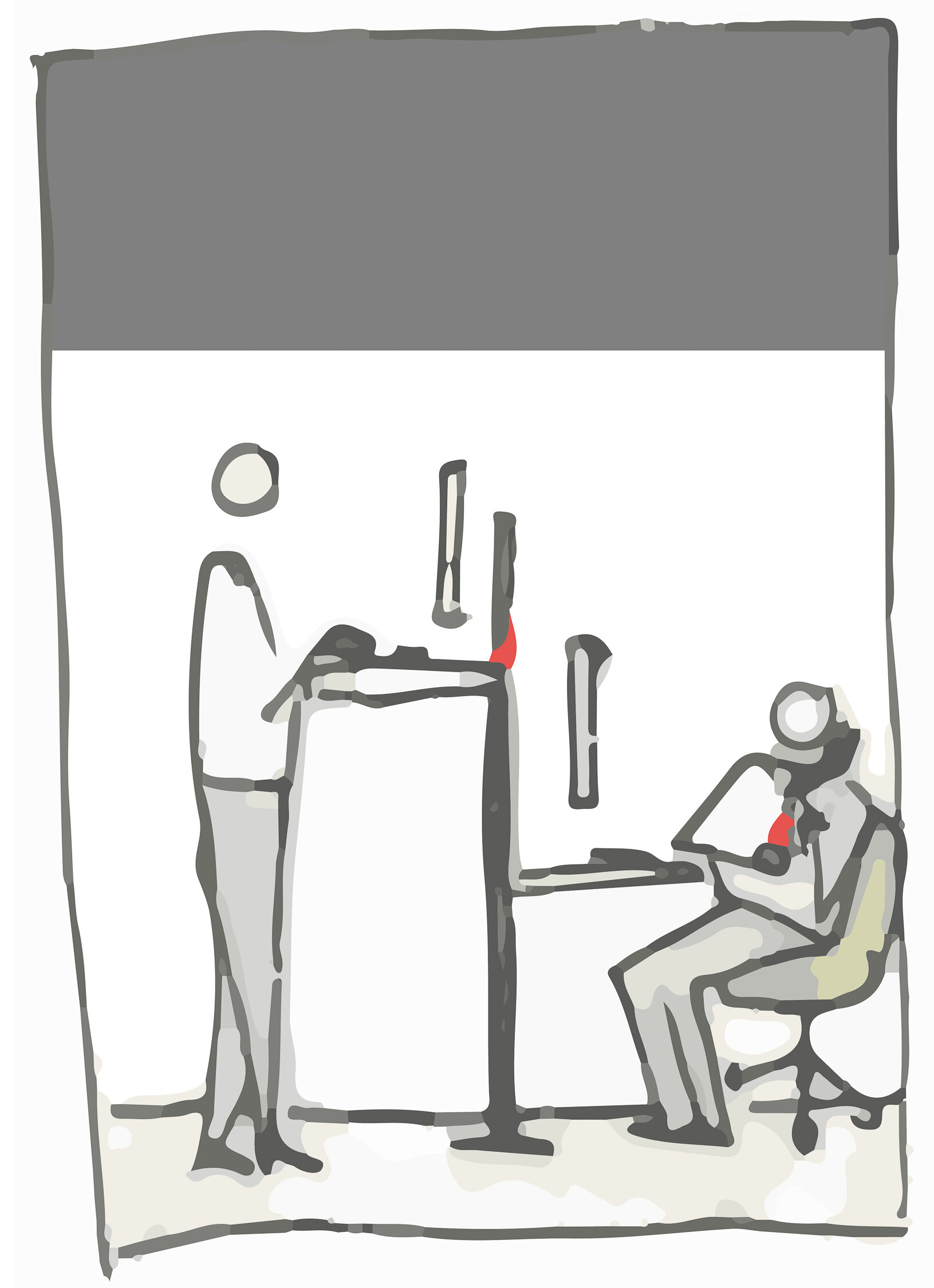
Until that point, we've seen a rise in technology being incorporated into furniture items keeping employees staying connected with air-charging and USB points. These small details make life just that little bit easier on the most stressful of days. Even by giving employees a choice with their desking, implementing sit-stand desking is more comfortable and healthier for the body.
Art for All
The Sculptor Nick Hornby past artist-in-residence was in an unlikely location - the London headquarters of law firm Pinsent Masons. He brought lawyers to his studio and curated his artwork around the office.
The art can play a part in the culture of the workplace, representing a set of shared attitudes, values, goals and practices. As well as being thought-provoking and sparking discussions with other staff members.

A Daily Pause
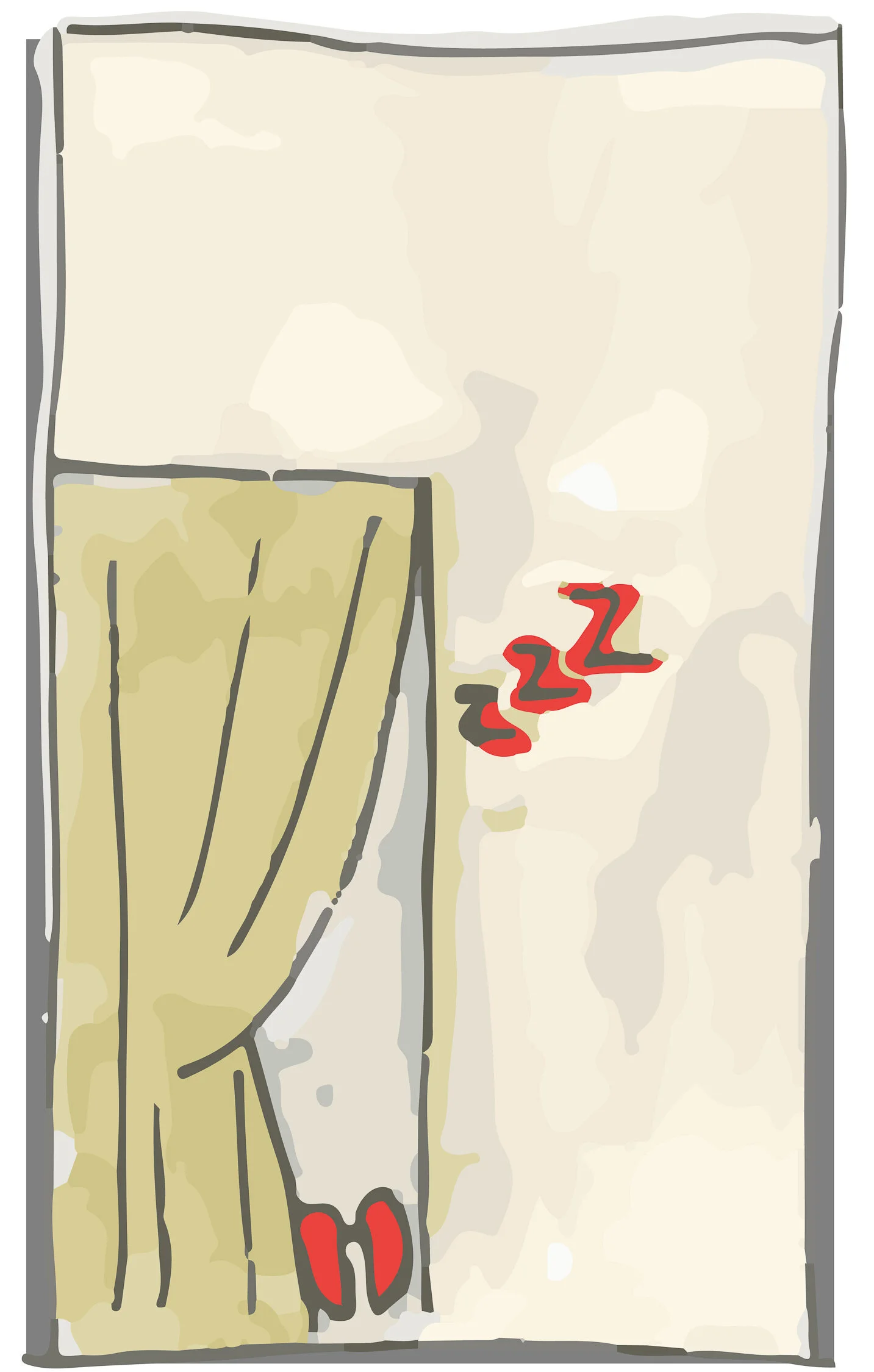
In Kiev, the Grammarly Office has a dedicated nap room that includes three sleeping blocks, with a weight sensor under the mattress that sends a signal to light with the indication of zZZ letters outside. The power of sleep and quiet reflection is becoming more commonly recognised as valuable, great opportunity to allow your mind and body to relax.
Happy Holidays
And we all know that a holiday is the best occasion to really relax and rebalance oneself. How about providing your employees with a 'wellbeing day' or have their birthday off on top of the standard holiday allowance to show your appreciation. Or go the extra mile, like FormRoom they are proud to offer a one month (fully paid) sabbatical for every 3 years your stay with their team. They reiterate the value of 'Let the company you work for, lift you up and push you forward; not drag you down or hold you back.'
Do you want to read more about how to improve your workplace? Check:
Blog and graphics by: Design Team
Publication date: August 14th, 2019
Biophilia within the workplace
The resurgence of the theory of biophilia and, more recently, biophilic design is more relevant than ever. We, as humans, have a deep-rooted attraction towards nature; and only in the last century has it become possible for people on mass to trap themselves in concrete jungles. One location, in particular, that has associations of estranging humans away from nature is the workplace. Consequently, within the commercial workplace setting, we are now experiencing a catalyst of hazy borders between the outdoors and indoors.
Biophilia within the workplace
Bringing the outdoors indoor isn’t a new development; the Chinese have been growing plants indoors as a symbol of wealth from as early as 1,000 B.C. Even in the UK during the Victorian Era the creation of glasshouse, due to the industrial revolution, allowed explorers to flourish exotic plants that they brought back home from their travels. However glasshouses were only obtainable for the social elite, for most householders biophilia was achieved through wallpapers that portrayed botany inspired patterns. These wallpapers became the most important element to interior decoration in a residential setting at that time.
These hazy borders between the outdoor and indoor have a distinct correlation with the borders between residential and commercial environments. This highlights the loss of singularisation of spaces in our contemporary society, instead with the domination of use value to embrace a fluid approach. Subsequently, as we nomadically roam, there is a constant yearning to feel connected to the surrounding landscapes, as it will support our fluid experiences, ensuring that a constant feeling of comfort is maintained.
A situational value is put on the consumption of space, with transitional spaces adding emphasis to the flexibility. It has been said that being geographically mobile will be a defining feature of the new elite; workplaces interiors will surpass the norm of commercialism through the deconstruction of convention, to allow the surrounding environment to envelop a lifestyle that is sprinkled with essences of home and the outdoors. This design approach highly values environmental empowerment that is directly linked to psychological comfort.
Biophilic design
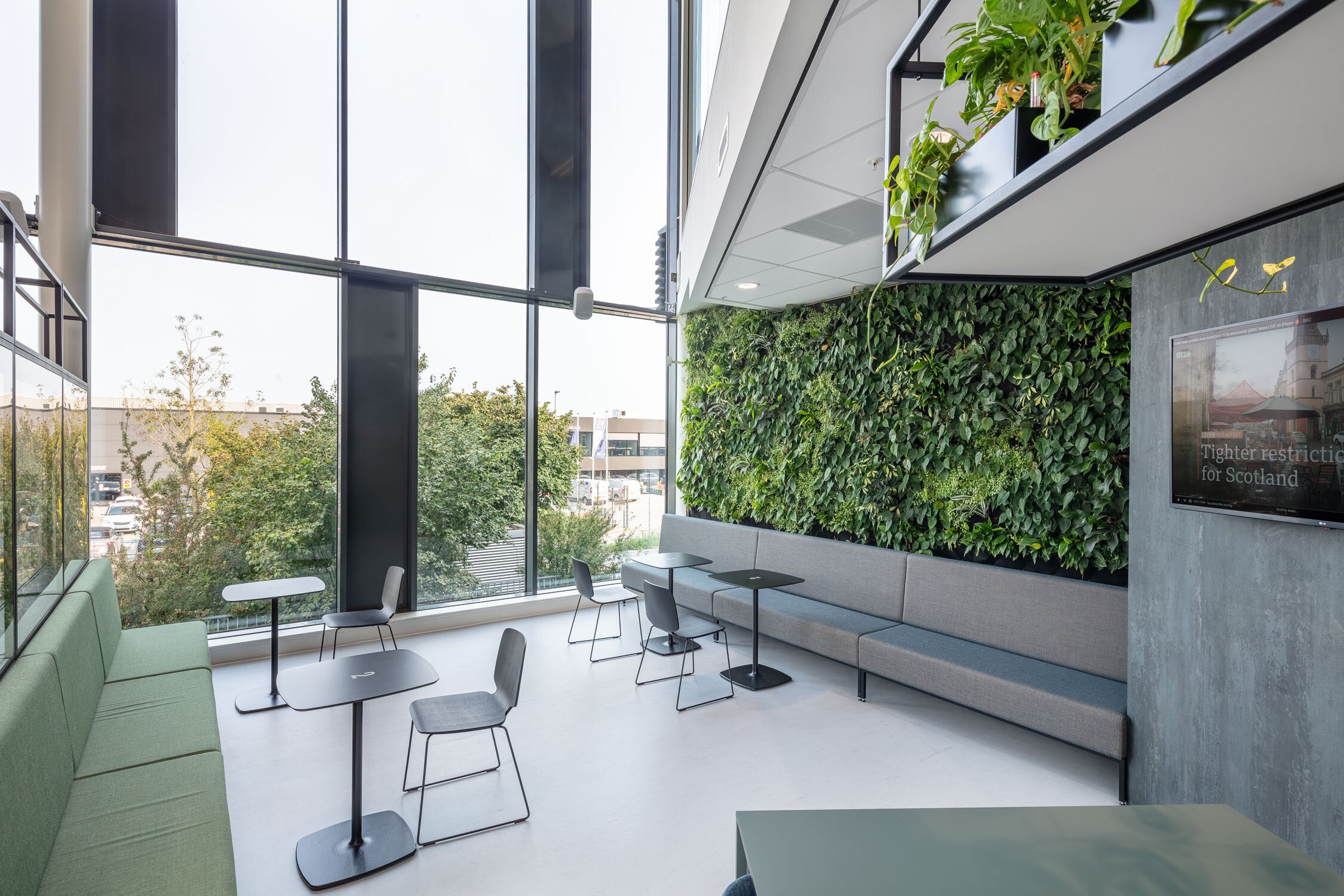
The most direct experience of nature in a built environment would be to have vegetation and flowering plants in the workplace. A study at Cardiff University stated the placement of living plants in a workplace setting improved productivity by 15%. The presence of plants is also known to reduce stress, enrich physical health and improve comfort. Additionally, the notion of comfort has many indirect experiences with nature to achieve biophilia, such as simulating natural light and air; they must be appropriate to each setting to help ensure functional wellbeing at work. By balancing environmental demands with skills and abilities, of employees on how they use their workplace, will create the optimal environment for creativity and flow.

To visually portray nature would be to simulate and construct out from the natural patina of materials such as leather, stone, copper, bronze and wood; that provokes positive visual and tactile responses. The choice of materiality, colours, naturalistic shapes and forms must be carefully considered to achieve biophilia and enable the fluidity within the lifestyles and movements of the modern man. For instance, an interior that appears light and airy may have translucent facades that open up for ventilation and movement, consenting to visual internal transparency. This dematerialisation projects to employees a focus on accessibility rather than ownership and possession.
As more workplaces are adopting agile working and open office configuration, it can be translated to creating internal transparencies across once traditional organisation to drive collaboration, integration and foster a sense of belonging. This is appropriation of an experience of space and places namely, mobility and way finding, as employee’s comfort and wellbeing is dependent on free movement. It can be achieved with stairs and ramps carefully integrated with platforms, seating and plans, allowing employees to flow through effortlessly.

Prevalently, in more recent times there has been a shift of attention to sustainability and the environment. There has been more demands for products to be sustainable, many manufactures have been developing different techniques to up-cycle materials. Biophilic design must have ethical value that cares for the sustainability of nature and must commit to maintaining a healthy relationship.
Biophilic design, within the workplace, is about creating wholesome habitats for employees, those that are istigkeit to natural forces. The istigkeit of biophilia isn’t superficial; it has many tangible layers and levels to evoke similar feelings one gains from the earth. Especially as management style are moving away from autocratic, towards an inclusive and collective approach. It is evident that this design methodology has enriched workplaces to increase productivity and boost overall moral; by incorporating biophilia in to a design scheme is less seen as a luxury and more of a commodity to improve employee wellbeing.
Text and images: Design Team
Publication date: August 22, 2017